
When the Cycling Classic Came Back to Philadelphia, It Found Something New
By: José Maldonado, Chief Marketing Officer
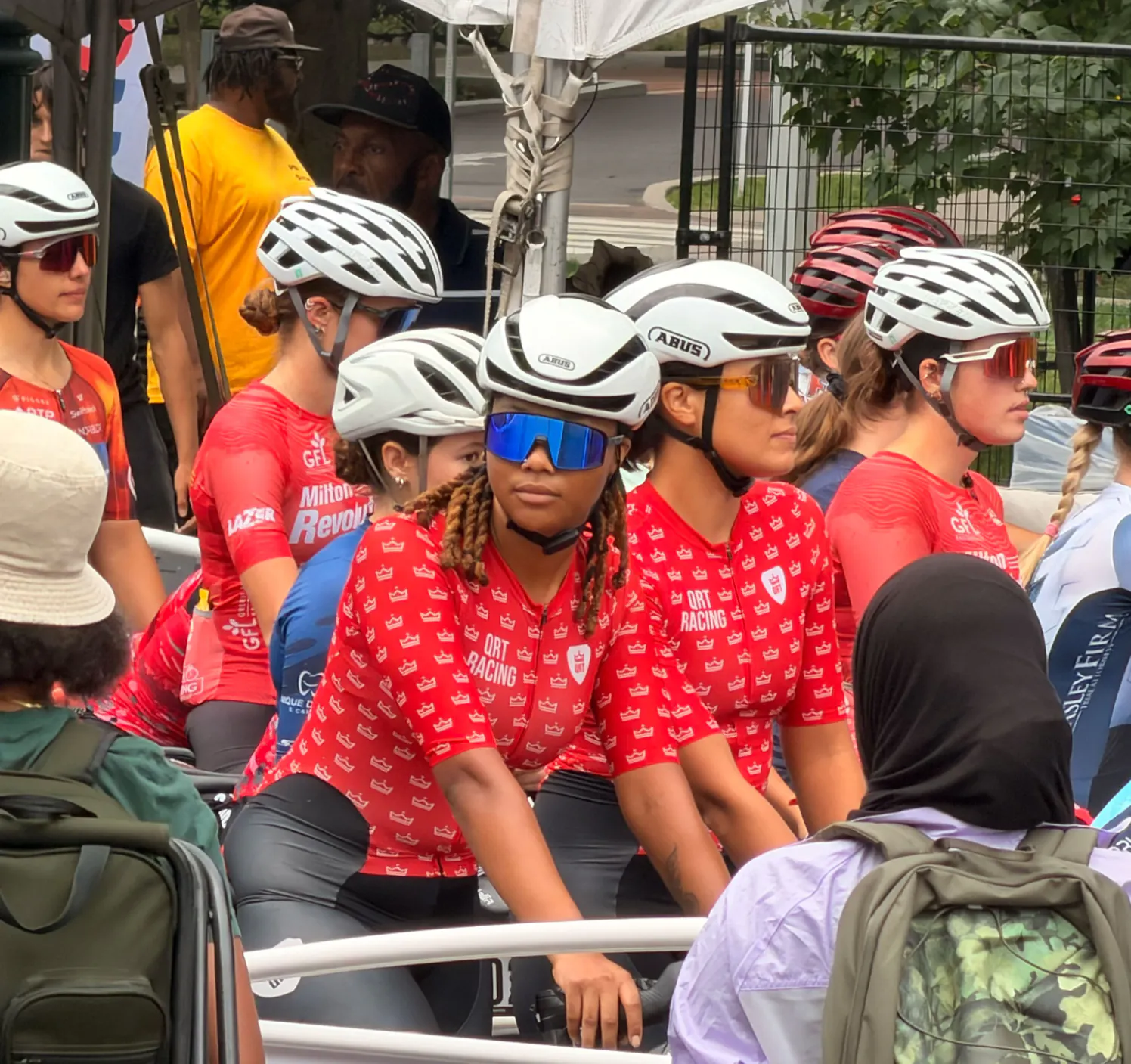
I lived two blocks from the top of the famous Manayunk Wall until 2011. On Sunday, five women from a club that didn't exist back then raced through my old neighborhood.
On Sunday, August 30, the Philadelphia Cycling Classic returned to the city for the first time since 2016. A 14.4-mile circuit off the Benjamin Franklin Parkway. A 17% grade on Levering Street that riders have called the “Manayunk Wall” since 1985. Equal purses of $75,000 for the women's and men's fields.
Five of the women on that start line ride for KRT QRT, a club founded in Northwest Philadelphia seven years ago by riders who had never raced anything. They lined up in a field that included Union Cycliste Internationale (UCI) World Tour teams.
The results of the race is not the point of this story.
"No matter the results, being out there was a great opportunity for our program,” said Curran Swint, founder and owner of KRT QRT. “It opens us up to more invites, more sponsorships, and more opportunities for what we're trying to do in cycling and in women's sports."
Everything Below This Line, I Learned on a Bike
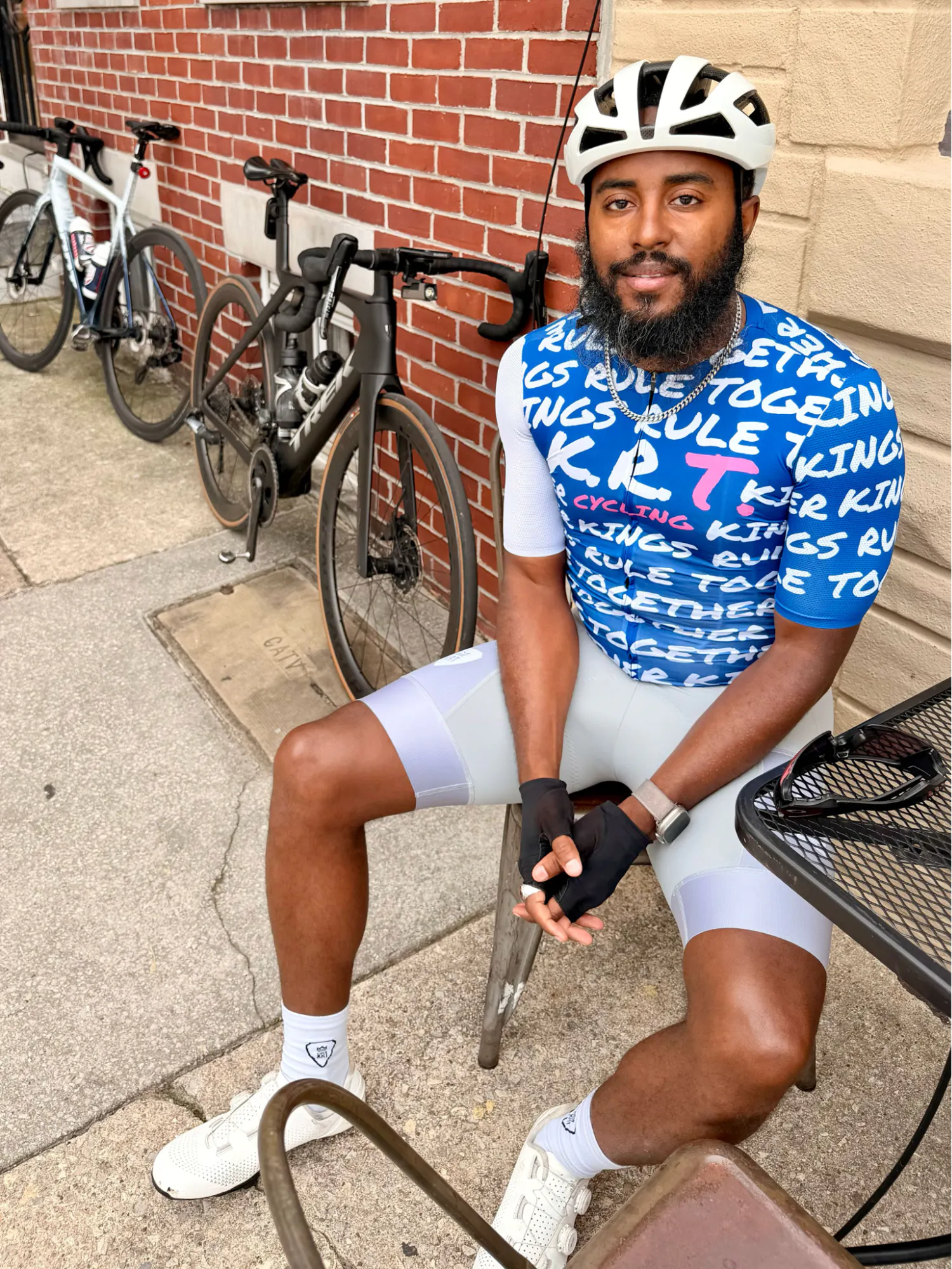
Curran Swint and I did not sit down for this interview. We rode.
I should say up front that being in Philadelphia was not a neutral assignment for me. I lived here until 2011. I met my wife here where we both became part of this vibrant cycling community. Our house sat just two blocks from the top of the Manayunk Wall.
When I left the city, the race was still running and KRT QRT did not exist. Both of those facts have since reversed.
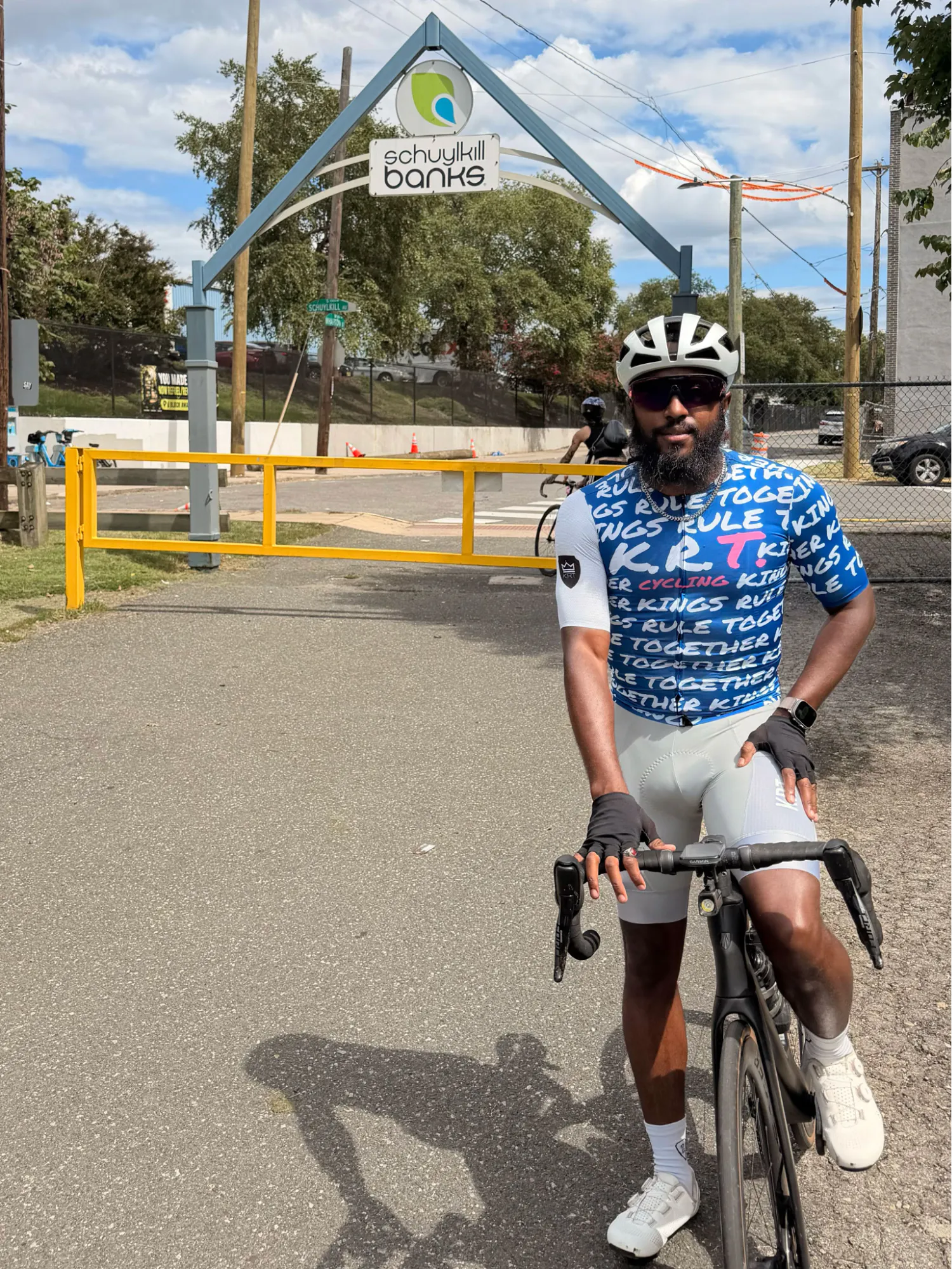
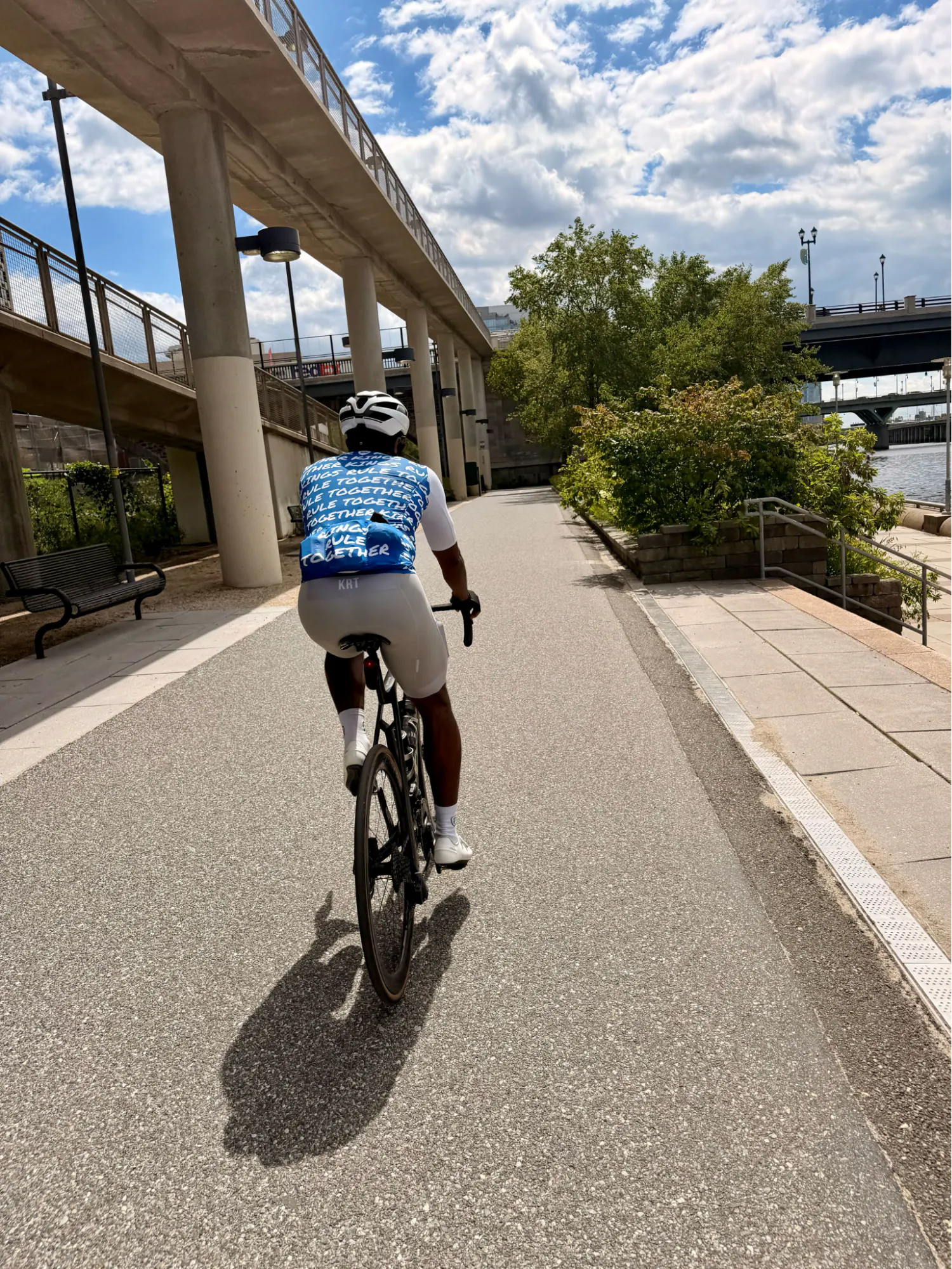
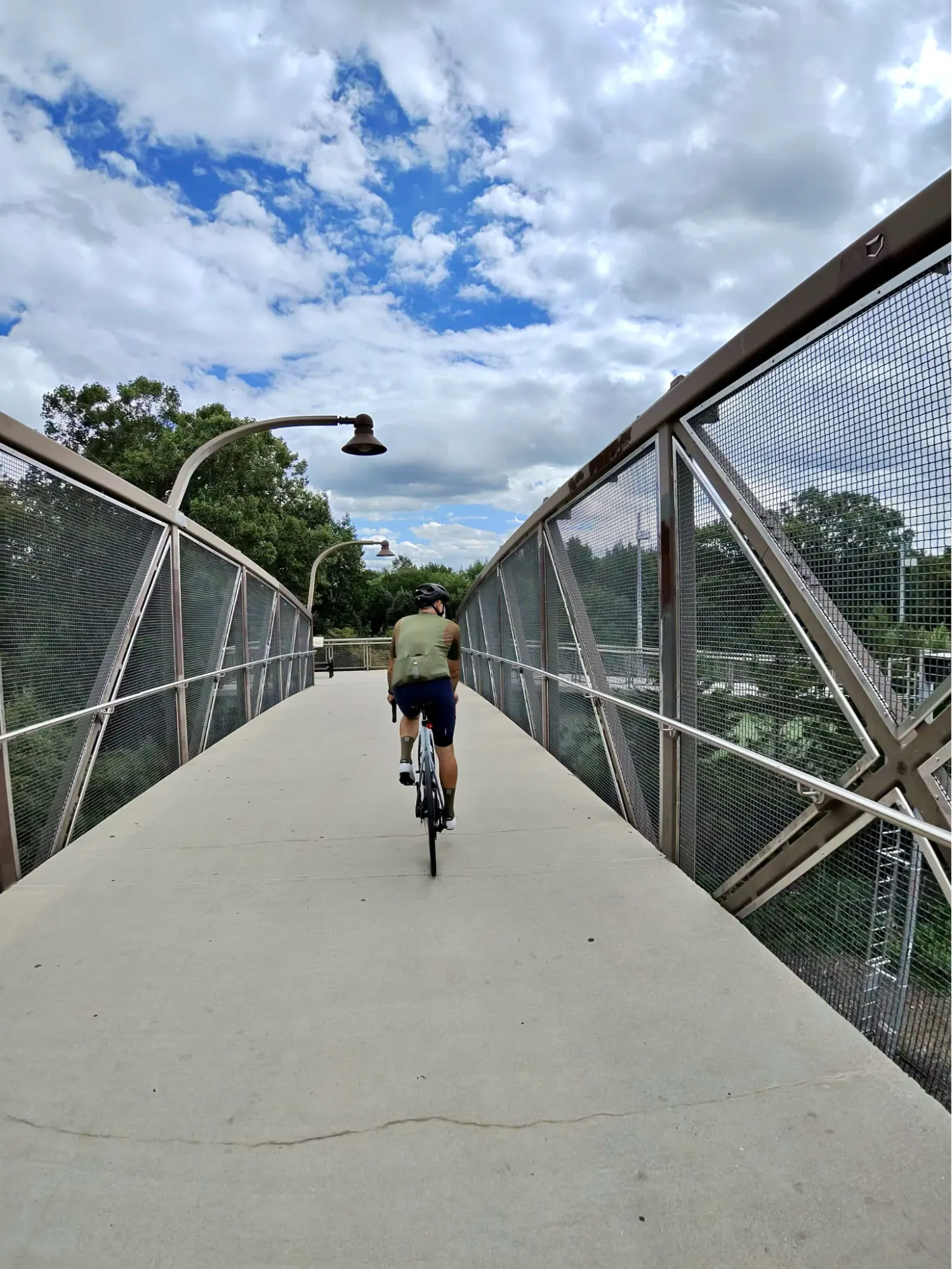
Swint showed me a Philadelphia I thought I knew. He met me at Volo Coffee with the route already in his head, and for the next two hours he pointed out the streets where he learned to ride and the connections that did not exist when he started — or when I lived here.
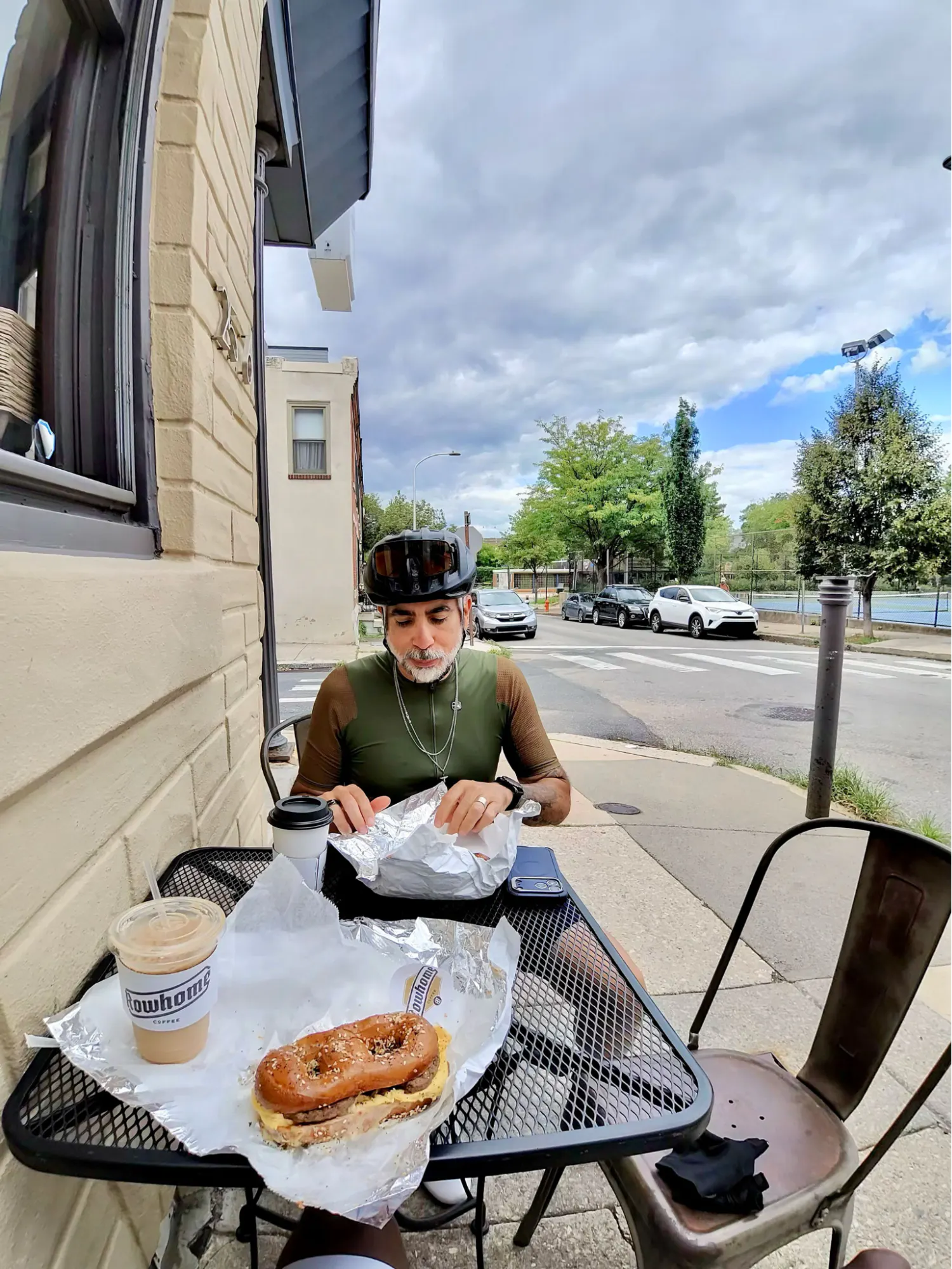
Partway through, we stopped at Rowhome Coffee for lunch and ordered sandwiches on Philly soft pretzels — the correct way to eat in this city — and kept talking.
You learn different things about a person on a bike than you do across a table. What they point at. When they stop talking on a climb and when they don't. Who they wave to.
It Started in a Barbershop
Swint was not a cyclist. In 2017, at Wild Styles Barbershop in Germantown, he noticed a barber who looked different than a few months earlier. The barber told him he had started riding a bike.
Swint borrowed a bike and a helmet from his brother and started showing up to Kelly Drive on Sundays with friends from the shop. Four riders soon became nine. In 2019, the group rode Ben to the Shore — 65 miles from Philadelphia to Atlantic City — raised money for uniforms, and became a team. That fall, Swint reconnected with Henry Wallace to build the organization.
KRT is Kings Rule Together. QRT is Queens Rule Together, formed to serve women riders who were not seeing themselves represented anywhere else in the sport. The club is now home to hundreds of members across 25 states and five countries.
The Tent Is the Strategy
KRT QRT's racing program fields more than 30 competitive members, Category 5 through Category 1, men and women, across nine states and Washington, D.C. They race road, criterium, track, and cyclocross. The pro women's program is about two years old.
That geographic spread would fracture most volunteer clubs. But KRT QRT holds it together with structure that most clubs do not build — and with a piece of hospitality that has nothing to do with bikes.
"Cookouts, barbecues, celebrations — that all comes from my culture. I always want people to feel like they're welcome, like they're home, like they're family. So it just became natural,” said Swint. “Anytime you come to our tent, it's a communal tent. You want something to drink out of the cooler? You want to sit down? I know how it feels to go somewhere and it's hot out and you don't know anybody. You never know what kind of day somebody will have. So you just be kind, and you open it up."
The practice of gathering as an act of joy is a durable tradition in Black communities, one that’s been documented as a form of care and continuity, not just recreation. Swint brought it to bike racing, a sport often organized around the opposite instinct: arrive, warm up, race, leave.
It converts. Swint described what happened at a race over the weekend.
"One of the guys I work with, Hector, invited some people out,” Swint said. “They came in regular clothes one day. The next day they were all dripped out in KRT racing gear."
That is the entire participation funnel, and it cost the price of a cooler.
It’s About the Membership
Most cycling clubs are organized around a ride. KRT QRT is organized around a membership, with the bike ride being one of member benefits.
The club outgrew Instagram years ago. It runs on a members-only Slack workspace now — a general channel, a women's channel, a Kings channel, channels for events, and a channel for every hub: Philly, North Carolina, Virginia Beach.
"As we got more members, we needed somewhere that could hold everybody. Slack keeps everything in one place. It also keeps the membership exclusive — early releases, things everybody isn't privy to,” said Swint. “People sell merchandise, put out training plans, sell off old wheels or a groupset, plan a trip. It's an open opportunity for people to do business with each other instead of going somewhere else."
A member traveling for work can find a group ride before they land. Members sell each other equipment, coach each other, and plan trips together inside a channel operated by the club.
This was the part I did not understand until I was on the bike with him. Swint does not talk about KRT QRT the way other club presidents talk about their clubs. He talks about it the way someone talks about people he is responsible for.
Participation Data Proves This Is the Work
PeopleForBikes has long been examining who rides and why, and the findings point to exactly what KRT QRT excels at.
A record 112 million Americans — 35% of people ages 3 and older — rode a bike at least once in 2024, the highest participation rate since the study began in 2014. Participation has grown 14% since 2016, outpacing U.S. population growth by more than threefold.
That growth is coming from casual riders. People who ride twice a month or less grew from 53% of participants in 2016 to 60% in 2024. More than two-thirds of them say they want to ride more than they currently do.
That is the gap. Millions of Americans have a bike, have interest, but are not riding. Safe places to ride addresses part of the gap — 53% of riders in the 2024 study reported worrying about being hit by a car. But infrastructure does not answer the other question a new rider asks, which is whether anyone will be glad to see them show up.
A club answers that side of the gap. And once someone is in, KRT QRT gives them somewhere to go.
"We have a pipeline,” said Swint. “You may not get a call from those other programs. But hey — you might fit our system a little better, and we're a local team where you can actually see yourself."
Swint was a casual rider in 2017. He is now sending a team to a UCI-sanctioned race. That is the kind of conversion the bike industry is desperately looking for.
Philadelphia Crossed the Line That Matters
Philadelphia scored 54 in PeopleForBikes’ 2026 City Ratings. The average score across all rated U.S. cities in 2026 was 36.
That 54 matters for a specific reason. According to the 2026 City Ratings summary report, a score of 50 is the point at which a city's low-stress network — bike infrastructure suitable for people of all ages and abilities — becomes connected enough to generate real momentum toward broader bikeability. Below 50, riders hit gaps that end trips. Above 50, the network starts compounding: more accessible destinations, more riders, and more support for the next project.
In 2026, 555 U.S. cities scored 50 or above, up from 234 in 2025. Of those 555 cities, 231 crossed the threshold for the first time.
Philadelphia's subscores show where the work is: the city’s retail access scores 71, while recreation (47), core services (48), opportunity (48), and transit (49) all sit below the connected mark. The city ranks 437th of 3,019 U.S. cities.
I saw what that score of 54 meant from the saddle. Swint kept pointing at things — a lane here, a connection there — that did not exist when he started riding in 2017.
I have a longer baseline than he does. Philadelphia was already a serious bike city in 2011, but I rode routes on this trip that I would not have chosen back then, on streets I used to avoid. That is what a score above 50 looks like from a bike: not just a single new lane, but an entire route that’s safe to ride.
Philadelphia now has both halves of the equation: a network above the tipping point, and a community organized to get people onto it.
What Sunday Actually Meant
Swint did not describe the Philadelphia Cycling Classic in terms of results. He described a room.
"It really hit me at the managers meeting. I was one of the few people of color in the room, representing not just my hometown but up-and-coming riders in general,” Swint said. “Being on this level was never technically a goal. But it felt good to be in that room, in that conversation — and to open those doors for other people."
And then he described the crowd.
"People came up to me. They came up to the team. It was all love. A lot of teams, you hear about them, you see them, but you don't know how they came about. You don't see their upbringing, their makeup. You may not even know the owner. People knew who we were. Even if they don't follow us, they recognize the brand, the colors, the crowns."
One of the five women racing was riding at home. Hannah Yeakey is a Philadelphia cyclist Swint describes as widely known on the city's fast group rides.
"Everybody sees her locally on all those rides — now she's out there representing her hometown and finishing that race. That was a blessing."
What the Industry Should Take From This
Back at Rowhome, over the pretzel sandwiches, I asked Swint where this goes.
"We went from riding around with a few friends in Philly to hundreds of members in 25 states and five countries. So the ceiling isn't that far off,” said Swint. “I want a well-oiled machine — stronger hubs, more youth development, a stronger race team. Maybe a storefront. Not a bike shop necessarily, but a place where people come, drink coffee, leave out for their rides, have events. And more outlets where somebody can come through our platform and get a job, get a career. Open more doors."
Someone watching from the sidewalk on Levering Street on Sunday saw a team that looked like them, on the Manayunk Wall, in their city.
For bike brands, retailers, and advocacy organizations, KRT QRT is a working answer to a question the industry keeps asking: how do you turn interest into participation and participation into retention? The club did it without a marketing budget. It did it with structure — hubs, leaders, a calendar, a Slack channel — and with a cooler, a tent, and somebody asking if you want to sit down.
That is replicable. The structure costs almost nothing to copy. What it requires is someone willing to be the person who is glad you came.
Learn more about KRT QRT at krtcycling.com. See how your city scores at cityratings.peopleforbikes.org.
Related Locations:

Take Action

Donate Now
Bring Better Biking to Your Community