
What Gets Measured Gets Done: How One California School is Building a Bike Culture
By: Grace Stonecipher, Infrastructure Analytics and Research Manager
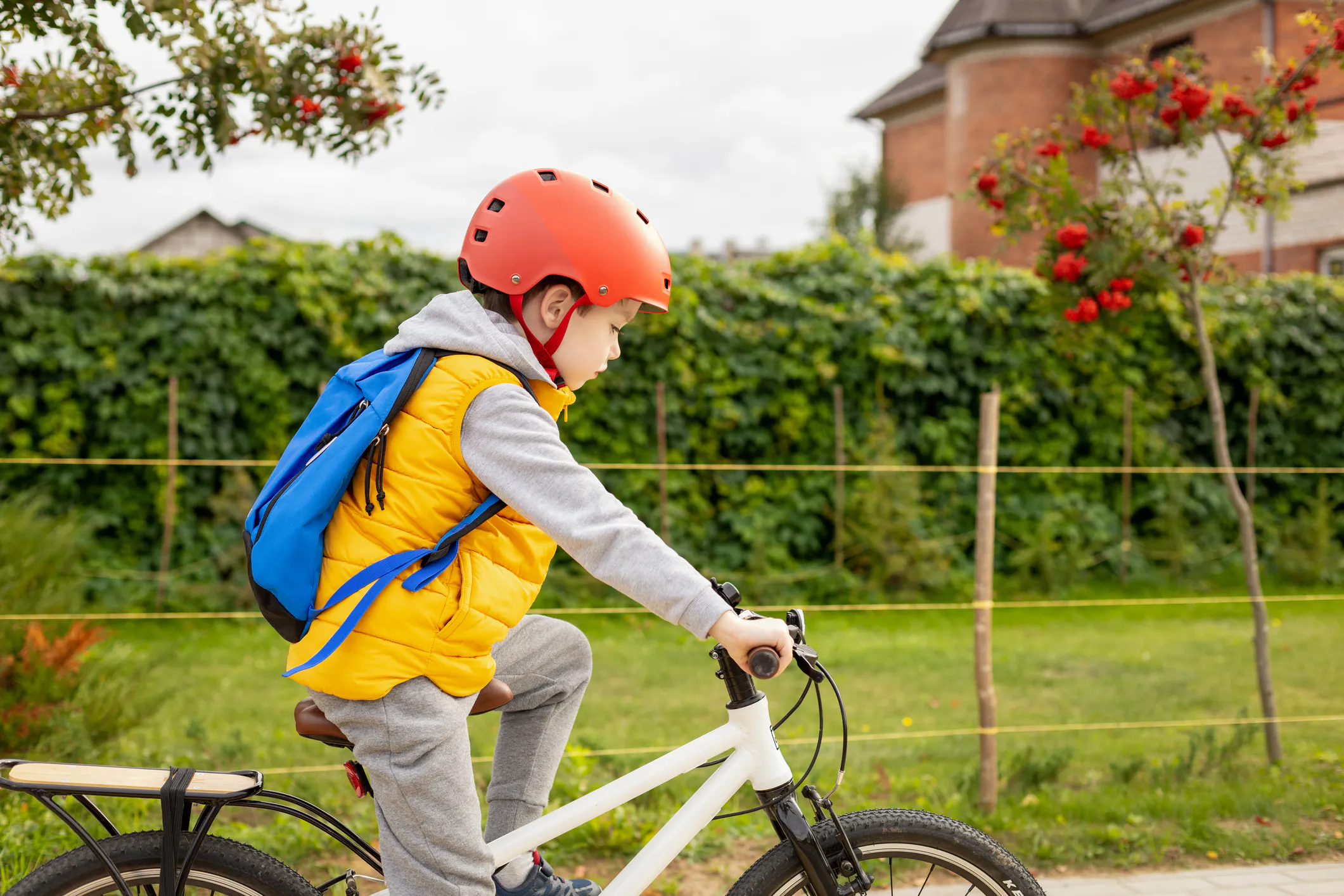
As Mill Valley, California, works to build a culture of biking, the city is involving its youngest residents.
Building a culture of biking starts with the next generation of riders.
Nationally, that culture is already shifting in an encouraging direction. A 2024 survey found that youth bicycling participation jumped from 49% to 56%, reversing years of steady decline since 2018.
Behind that growing number of kids riding is the work of national groups like the Youth Cycling Coalition, convened by PeopleForBikes, coupled with local efforts encouraging youth participation one community at a time. One such local effort is taking place at Old Mill School in Mill Valley, California.
Building a Pilot Program
In 2023, the City of Mill Valley created the Transportation Mobility Advisory Committee (TMAC) with the mission of building better streets, safer routes, and stronger communities. Under this mandate, TMAC started to look into how to encourage more kids to walk and bike to school.
According to Bill Hoppin, chair of TMAC, the reasoning for this initiative was twofold.
“One, it encourages independence in this world of phones and everything else. Physically connecting to your environment gives you a better sense of community in your city. This is especially important at an early age, because then it becomes part of the culture,” says Hoppin. “And two, it fundamentally reduces traffic. Every student who can bike or walk to school is one less car at the peak, most challenging hours of traffic.”
The city chose Old Mill School, an elementary school with approximately 250 students, for its pilot program. One of the oldest schools in the city, Old Mill is located right downtown, less than a mile from bike-friendly infrastructure on Miller Avenue.
Working from a Clear Baseline
To measure progress, TMAC first needed to answer the question: what is happening today?
Counting the bikes in the school bike rack provided one measure. Each month, city partner Safe Routes to School sponsored Walk and Roll Wednesdays, resulting in a peak of 34 bikes in the rack in October of 2025.
Safe Routes to School would also run classroom surveys at Old Mill, asking students to raise their hands if they biked or walked to school that day. Often, close to 50% of hands would go up; however, a quick check of the bike racks revealed that this number may be more aspirational than rooted in reality.
While these rack and classroom surveys provided insight into the capacity and desire for active transportation on targeted days, TMAC wanted to understand the everyday trends.
To collect repeatable, objective data that could measure sustained increases in active transportation, they installed a device called an Eco-Counter. The device was placed at the primary entry/exit point of the school and recorded the number of students walking and biking to school each day.
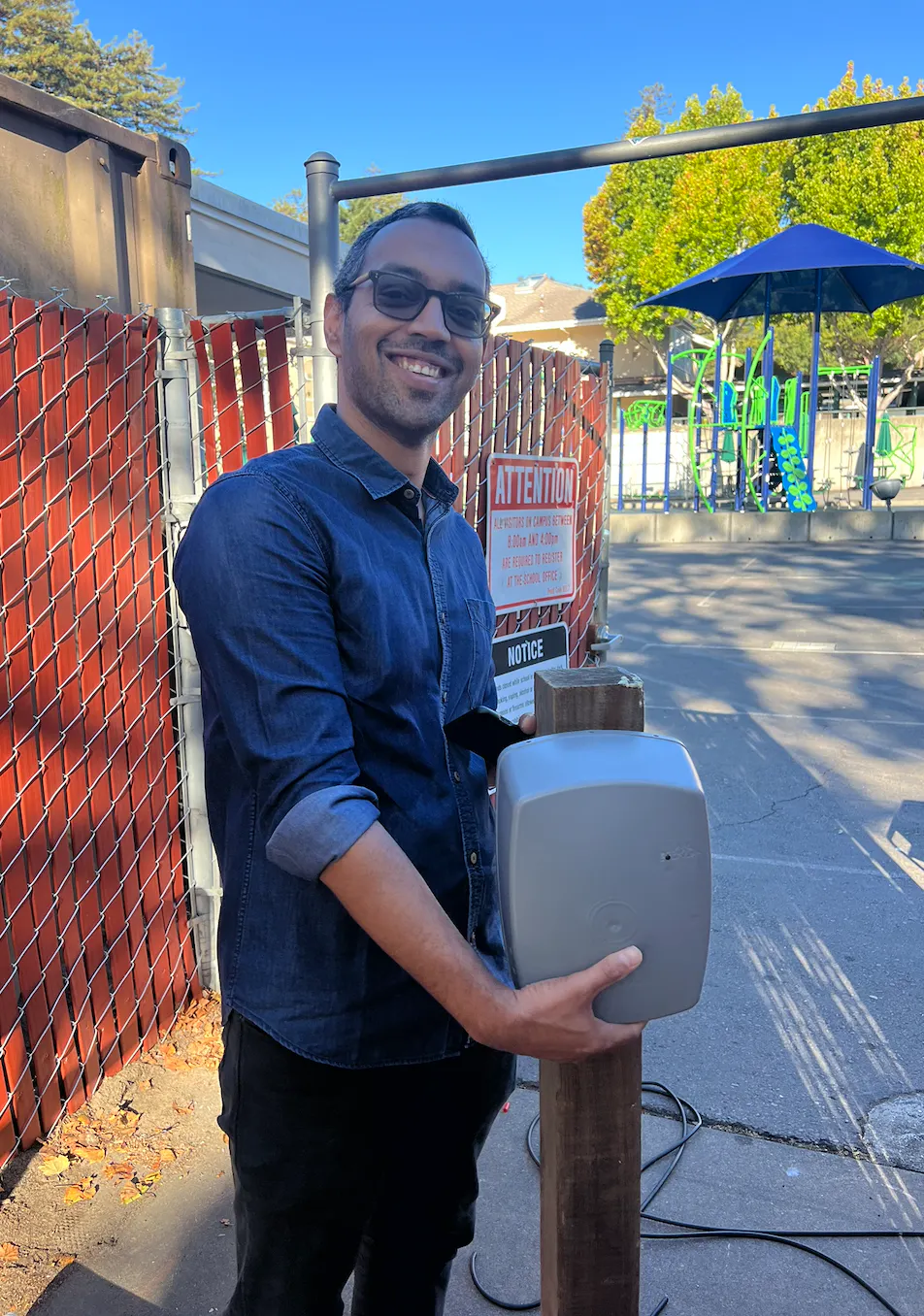
Installing the Eco-Counter at the entrance to the school.
Setting New Goals
After collecting the baseline data, TMAC looked at the demographics of the student body to understand where families lived and who could feasibly walk or bike. They saw there was a clear potential for more participation, but how could they drive behavior change?
“Incentives and communication,” says Hoppin. “Let's make sure we've got a good baseline of what's actually happening today with this measurement, and let's set an aggressive goal.”
After involving students, parents, and school administrators in the conversation, TMAC set an ambitious goal. “Let's double the average number of people — not just on Wednesdays when everyone gets excited, but average, repeatable habits, so kids are getting up a little early, getting their stuff together, and biking to school,” says Hoppin. “And let's improve the number of kids walking to school by 50%.”
Turning Data Into Community Action
At PeopleForBikes, we often use the phrase ‘what gets measured gets done’ to talk about the importance of tracking infrastructure projects across the country and the impact they have on local riding.
Old Mill School leaned into this concept as well, and involved students in the process. Students competed to design a banner that would hang near the Eco-Counter, celebrating the program. Every two weeks, TMAC would update the walk and bike meters out front of the school, showing progress in real time.
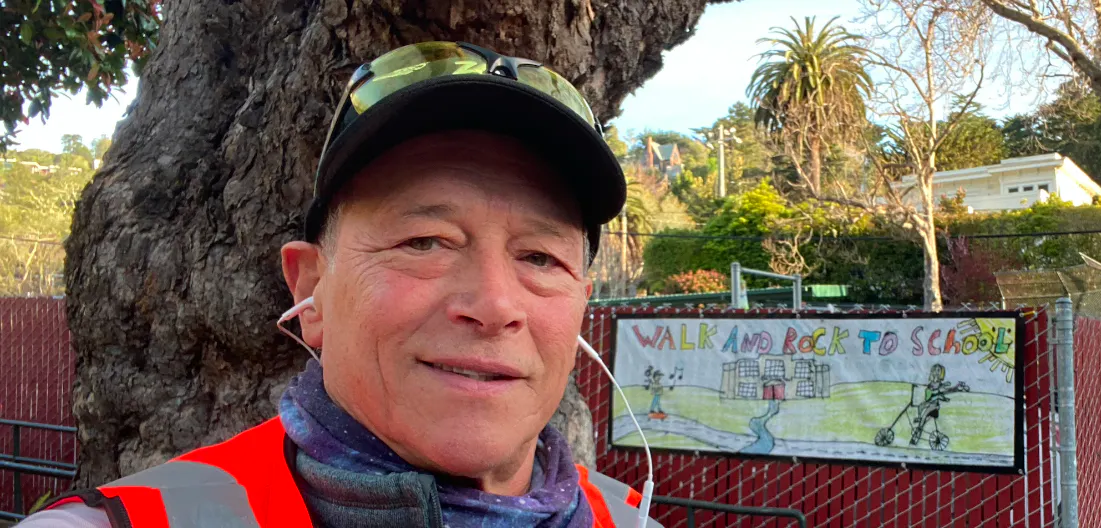
A student named Laura won the banner contest, with a banner reading ‘Walk and Rock to School'.
In May, Old Mill hit its goal: they doubled the number of kids riding bikes and improved walking by more than 50%. On average, the number of kids walking or rolling to school increased from 23% to 35%.
The school even had to buy a new bike rack to increase capacity for new riders. Hoppin noted the positive impact of students on their peers. “A full bike rack creates a tipping-point effect — kids see it and think, ‘I should bike to school, too.’”
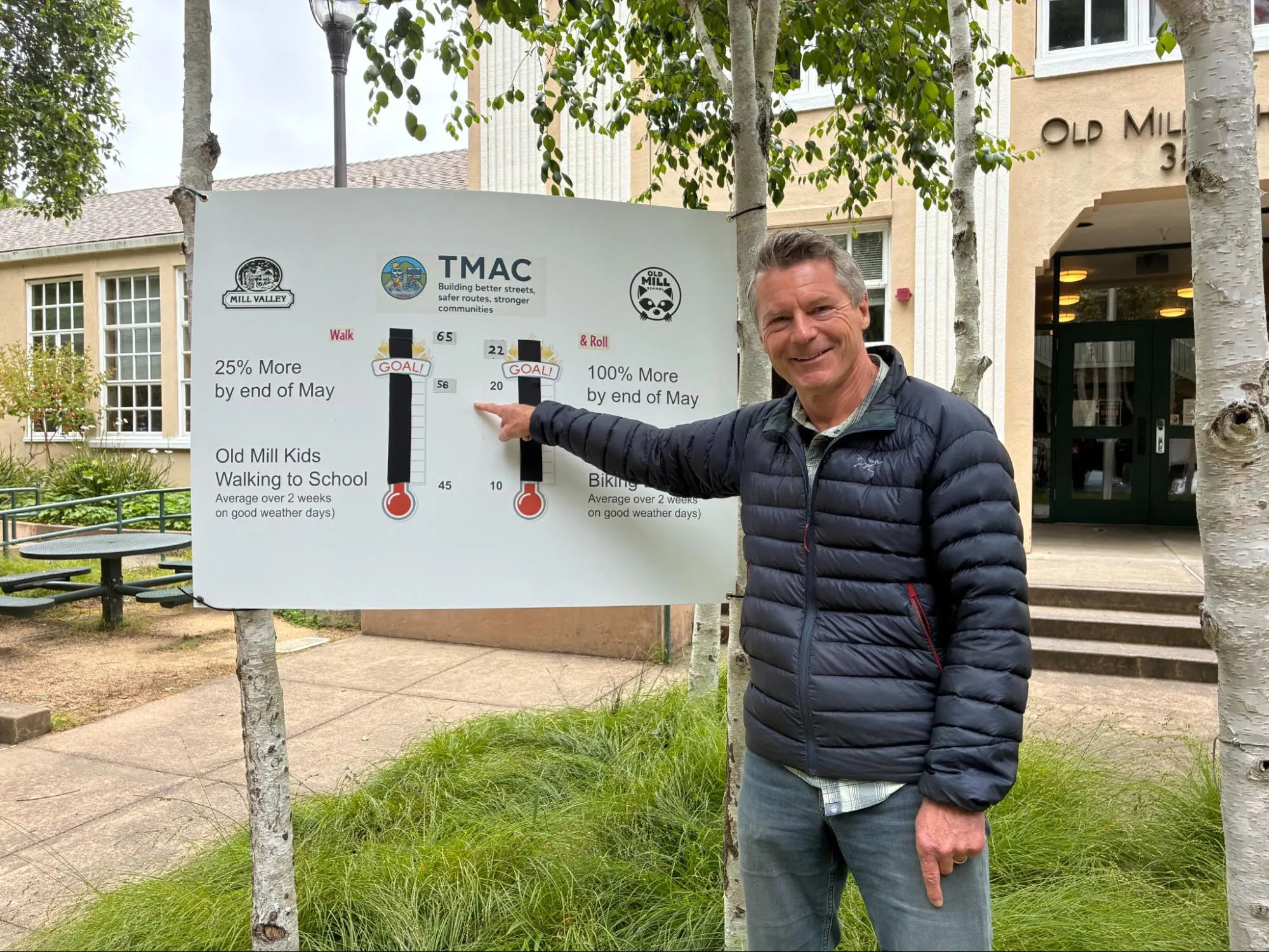
TMAC updated the tracking thermometers every two weeks, allowing students and their families to see progress towards the goal.
Acknowledging that not all students can walk or bike to school, TMAC didn’t want to just award individuals. Instead, the program focused on incentivizing the greater school community to build a walk and roll culture.
To celebrate, the students were rewarded with an end-of-school BMX freestyle assembly, where they got to watch BMX riders perform cool tricks while also relaying stories of overcoming adversity.
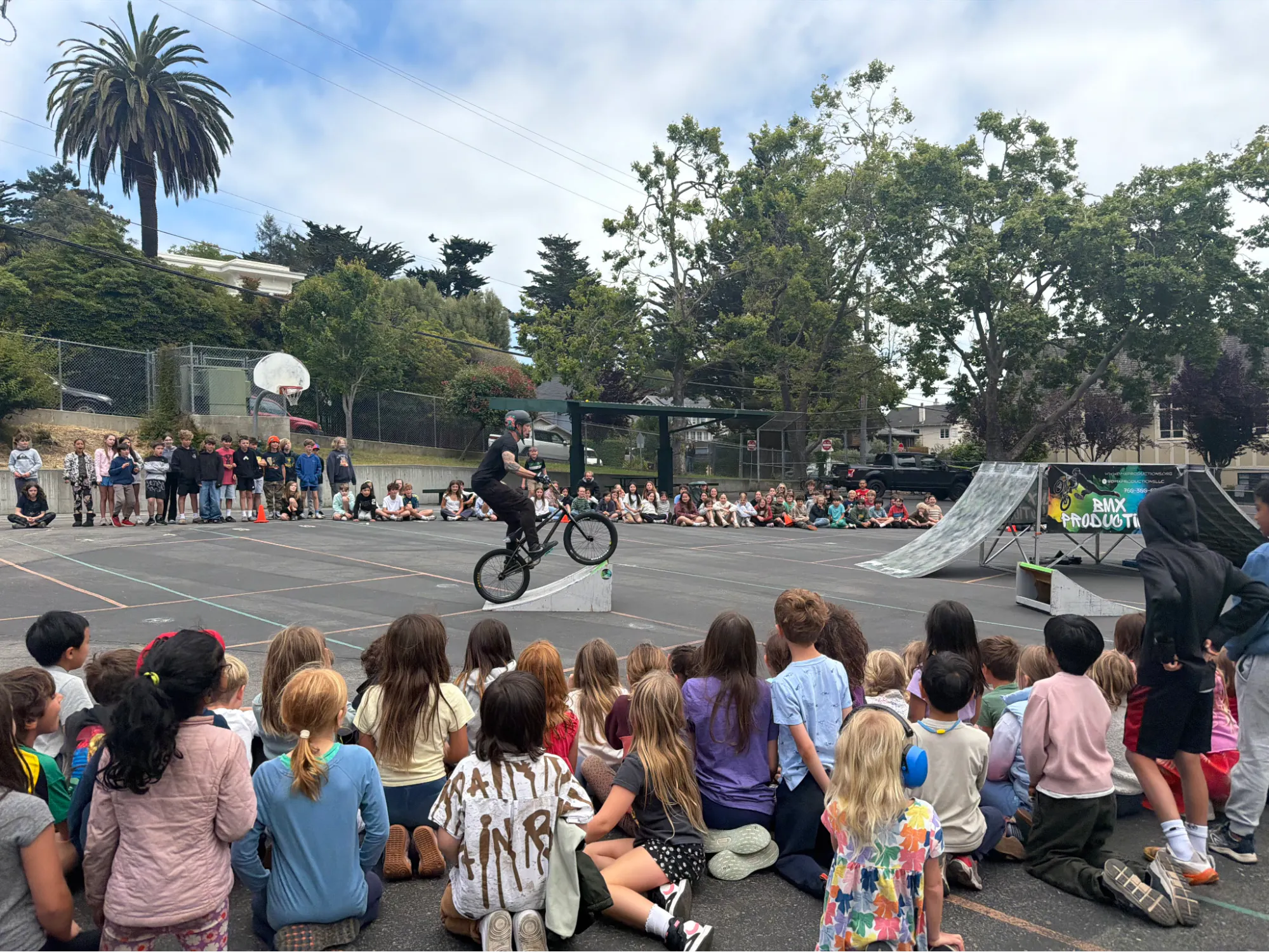
Students watch the BMX assembly to celebrate a successful year.
The city also gave away two brand new bikes to students in need. “I saw for myself today one of the new bikes being fitted for one of the students we had identified,” says Principal Jason Matlon. “The pure joy in her face… she did not want to stop riding that bike. I can say confidently that there is one more student biking to school.”
TMAC hopes to continue this trend as the new school year begins. Another $3,000 of city funds have been allocated to the project, supporting programming like bike clinics to further increase student confidence and safety.
Lessons Learned
Hoppin believes that there are three key reasons that the program was so successful, and looks to take these lessons learned as TMAC works with a second school this coming year.
1. Community Involvement: Each school is unique, with different entry/exit points, culture, and challenges around why people aren't biking or walking as much as they could. Setting appropriate goals and incentives requires community input.
2. Inclusive Incentives: The original plan was to reward students who walked or biked the most. However, it was quickly understood that this could exclude some students who simply lived too far away. Creating a communitywide incentive can create a more positive experience for all students.
3. Continuous Measurement and Feedback: The ability to collect data every day and report on two-week averages proved to be a powerful motivator, while also keeping everyone accountable towards the final goal.
Setting the Flywheel in Motion
PeopleForBikes often talks about the flywheel that happens between infrastructure and participation. When a city has safe, connected places to ride, more people are willing to ride their bike. When more people ride, it builds a culture of biking, which in turn leads to increased desire and advocacy for more high-quality bike infrastructure.
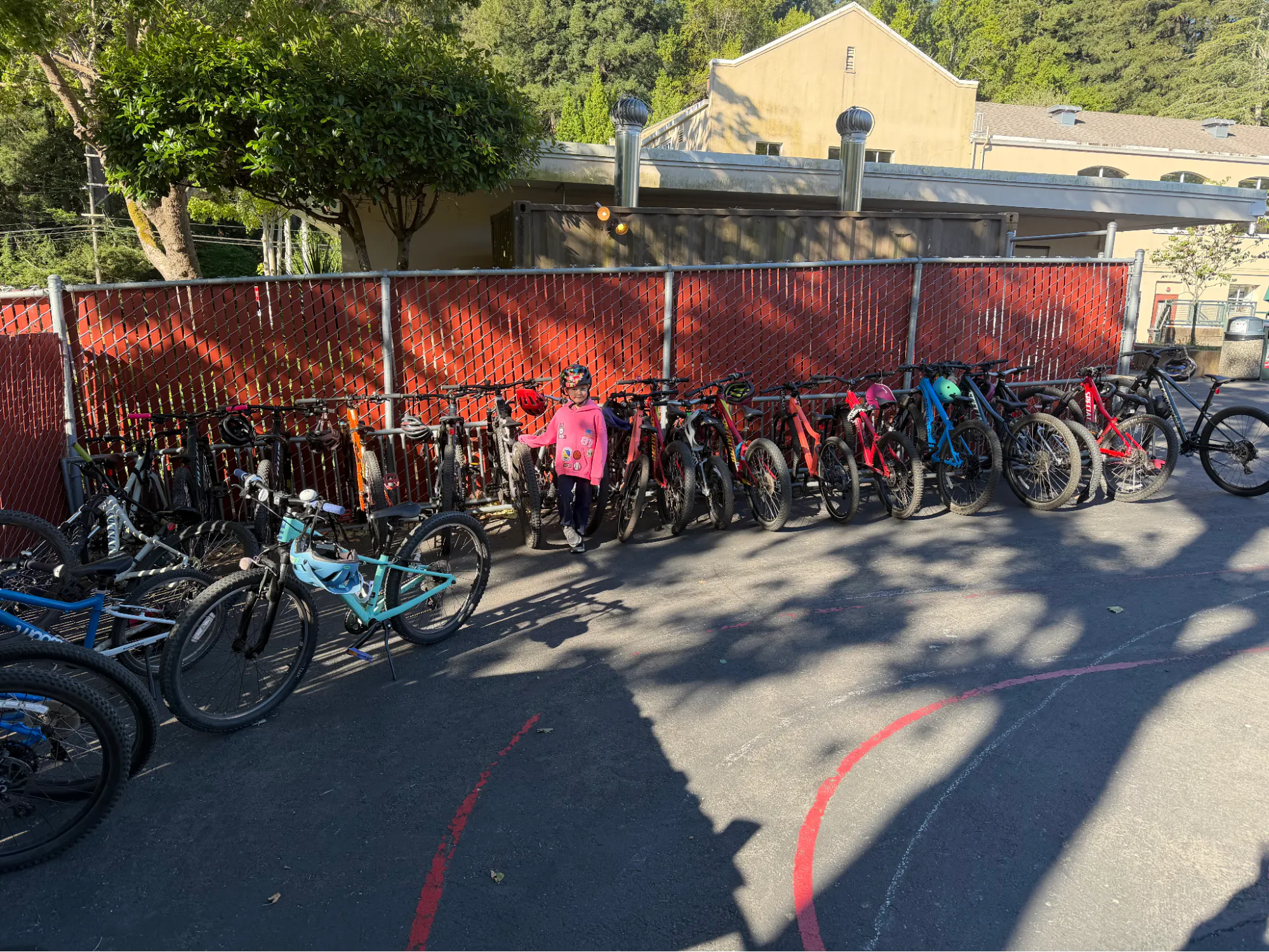
Full bike racks at Old Mill School.
Mill Valley is an example of this flywheel in action. As more young people choose to ride their bikes to school, the city is using Safe Routes to School data to identify and prioritize new infrastructure investment. "A school can come together and improve its walking and biking numbers, and as a result the city prioritizes making sure those routes are safe," Hoppin says. "The two move in concert with each other."
This fall, TMAC is bringing the same model to a second Mill Valley elementary school. The specifics will likely look different — every school has its own culture, its own routes, its own reasons some kids aren't riding yet. But the underlying approach is solid: community involvement, trusted data, and continuous feedback.
Old Mill School already had to buy a second bike rack. Soon, TMAC hopes, another school might need one too.
Related Locations:

Take Action

Donate Now
Bring Better Biking to Your Community