

Building a Culture of Biking in Mill Valley, California
By: Grace Stonecipher, Infrastructure Analytics + Research Manager
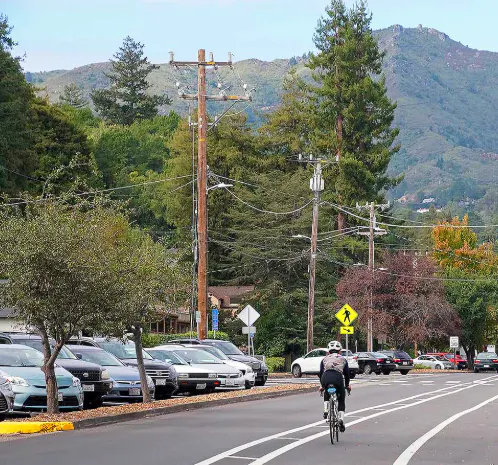
Mill Valley has selected PeopleForBikes’ City Ratings and SPRINT principles to target the most impactful efforts that will improve biking locally and track progress as they kick off multiple initiatives designed to achieve lofty goals aligned with the city’s heritage.
Biking has long been a core part of the culture in Mill Valley, California. Mount Tamalpais, or Mount Tam to locals, sits just north of the city and is best known as the birthplace of mountain biking. In addition to this extensive network of trails, residents of Mill Valley are now seeing more opportunities for biking even closer to home.
A Holistic Approach to Solving Transportation Problems
Located just north of the Golden Gate Bridge, the roads of Mill Valley were originally laid out to serve a more rural population. As the population grew, the city’s geography limited opportunities for major infrastructural changes — there simply wasn’t room to add more car lanes. With traffic increasingly impacting daily life, Mill Valley needed to find a better solution to move people safely and efficiently to the places they wanted to go.
The city council recognized the opportunity for a transportation modeshift, and also the need to approach the issue of traffic more holistically. In 2023, Mill Valley created the Transportation Mobility Advisory Committee (TMAC), which addresses the four major modes of transportation: cars, buses, bikes, and walking.
Building a More Bikeable City: Applying the SPRINT Principles
Summarized by the acronym SPRINT, PeopleForBikes identified six principles that can help cities of all sizes become great places to ride:
- Safe Speeds
- Protected Lanes
- Reallocated Space
- Intersection Treatments
- Network Connectivity
- Trusted Data
Mill Valley has already applied a number of these principles in their work to improve biking locally, best exemplified by the Miller Avenue project. Miller Avenue is essentially one of the main streets in and out of Mill Valley, and the city completed a major overhaul of the road in 2018 with continued improvements in the years since.
Safe Speeds: Mill Valley lowered the speed limit on Miller Avenue from 30 mph down to 25 mph, aligning with NACTO guidelines. The city has also been proactive about lowering speed limits on other key streets, especially near schools.
Protected Lanes: A buffered bike lane was added in each direction along Miller Avenue.
Reallocating Space: Miller Avenue was narrowed down to one lane in certain parts to allow for the construction of the buffered bike lane. In another part of town, an agreement was made to construct a multi-use path through the middle of a golf course, improving connectivity between the neighborhood and downtown.
Intersection Treatments: The city is working on a safety corridor study on Miller Avenue, which includes looking at how to improve the safety of two major intersections for bikes, pedestrians, and cars.
Network Connectivity: Mill Valley is currently updating its bike/pedestrian plan and connectivity will be a big focus in prioritizing future projects which will be reviewed annually. The city also puts a lot of emphasis on connecting to surrounding towns, collaborating on mutli-use paths that provide additional opportunities for getting around by bike.
Trusted Data: A representative from Mill Valley attended PeopleForBikes’ mapathons and updated their OpenStreetMap data to better reflect Mill Valley’s infrastructure, leading to a more accurate City Ratings score.
A Culture of Biking
Bike and pedestrian infrastructure has long been a key part of Mill Valley’s city planning strategy. Equally important is the support of residents for safer places to walk and bike. With the construction of new bike lanes, the culture around bikes as transportation has started to shift.
“The thing about humans is we like to do what other people are doing. If you are stuck in traffic and you're looking at people on their bikes riding by, you go, ‘You know what? There's probably a better way of doing this. Maybe I should [ride] too.’,” says Urban Carmel, Mill Valley city councilmember and former mayor. “The Miller Avenue bike lane is really important because it's a billboard for what we're trying to create.”
By building infrastructure that provides a comfortable, safe, connected alternative to driving, Mill Valley is proactively supporting a modeshift and creating a culture of biking throughout the city. With the rising popularity of e-bikes and cargo bikes, this culture is expanding to a much broader array of people.
“Advocacy looks different now because it covers so many segments of our population,” says Kat Jones, another city councilmember. “It's a lot easier to gain support for bike infrastructure from this broad swath of the population. It just has a different face than it did before. A nice bike lane has really changed a lot of lives.”
City Ratings as a Rallying Cry
Bill Hoppin, chair of TMAC, describes Mill Valley as a city where residents have pride in their town and want to see it continue to improve and be best-in-class as a place to live and raise a family. They also growingly see a clear 1:1 relationship for traffic reduction that results when one trip by car is replaced by a bike. This is why Hoppin selected PeopleForBikes’ City Ratings program, because it’s a clear, data-driven way to measure annual progress and maintain momentum.
“We want to do really well on this, and we think that PeopleForBikes can help us fundamentally create a better, safer, more sustainable city — a city that lives up to the values it proclaims,” says Hoppin. “It's not going to happen overnight, so having an annual ranking that can show incremental improvement and progress is critical and we are excited for what comes next.”
2026 City Ratings — Coming Soon
Stay tuned for the release of PeopleForBikes’ 2026 City Ratings in June, highlighting communities like Mill Valley that are building connected, low-stress networks. This year, new census data, refined bike network analyses, and updated design standards are reshaping how cities are scored. Learn more here.
Related Locations:

Take Action

Donate Now
Bring Better Biking to Your Community