
Connected Bike Networks Are Key to Growing Ridership
By: Martina Haggerty, Vice President of Infrastructure
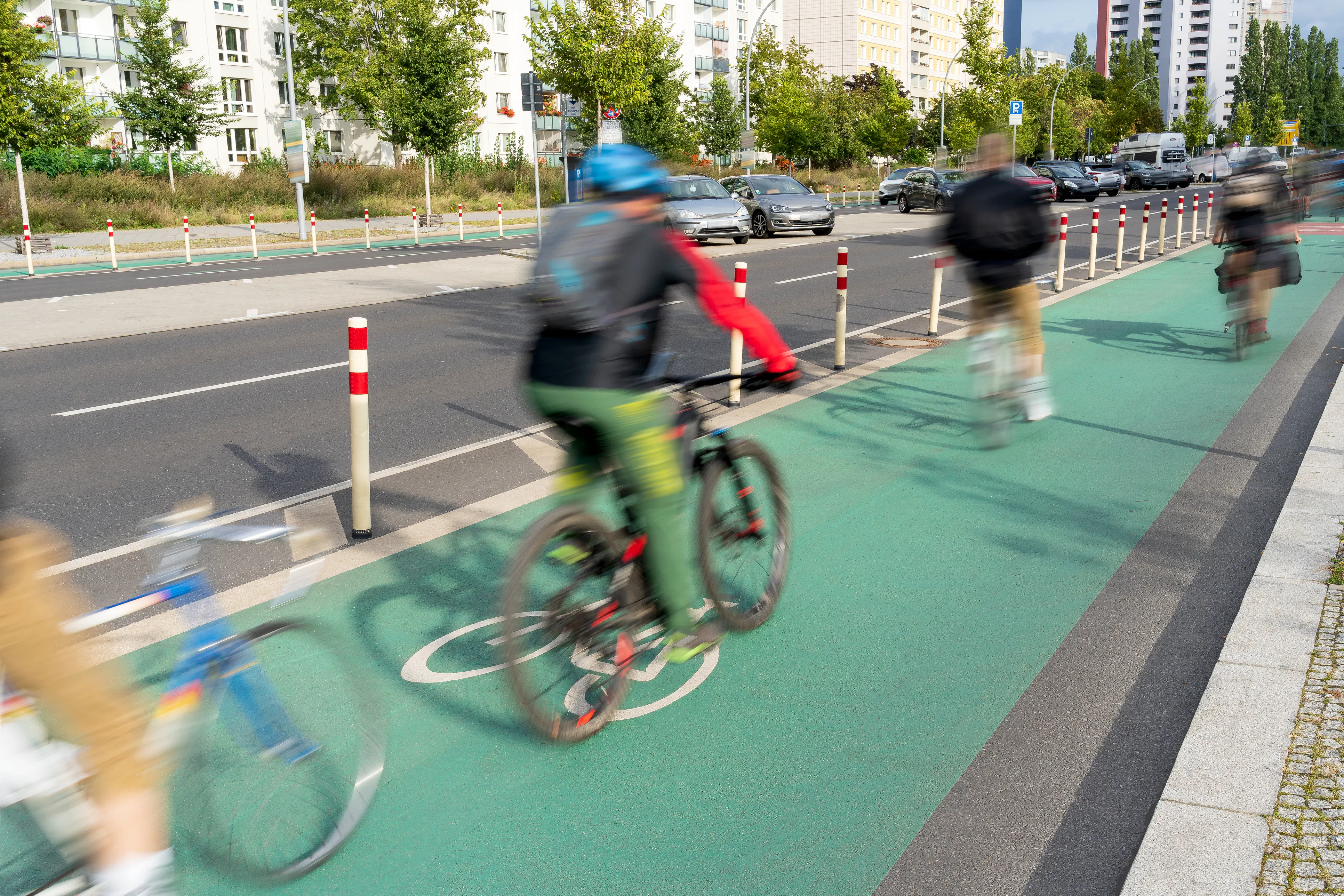
A new study highlights that the collective strength of an entire bike network matters more to getting people riding than any single project alone.
Ask any group of bike advocates what kind of infrastructure gets more people riding and you’ll get a familiar list: protected bike lanes, off-road paths, and protected intersections. But new research suggests that’s not the only question that matters.
A recent study published in Transportation Research Record by Nicholas N. Ferenchak and Wesley E. Marshall makes something clear that many of us have felt intuitively for years:
It’s not just what you build. It’s how connected it is. The collective strength of a bike network matters more than any single project — by a lot.
Researchers analyzed more than 14,000 neighborhoods across 28 U.S. cities and found that denser bike networks were 4.6x more strongly associated with ridership growth than individual facility installations. In other words: a connected system matters. Now, that doesn’t mean individual projects don’t matter, but rather that projects only reach their full potential when they’re part of something bigger.
The study confirms what PeopleForBikes has long advocated for: low-stress infrastructure works — but context also matters.
1. Protected bike lanes lead the way. Protected bike lanes consistently showed the strongest standalone impact on ridership growth among individual facility types. Even when installed in weaker networks, they still moved the needle.
2. Buffered lanes also perform well. They’re not quite as powerful as protected lanes, but they show meaningful gains.
3. Paint-only bike lanes? It depends. Here’s where things get interesting: standard (paint-only) bike lanes appear to increase ridership, but once you account for the surrounding network, that effect disappears. Basically, paint alone doesn’t drive ridership — connectivity does.
4. Shared lane markings (sharrows) don’t move the needle. No surprise to anyone who has ever biked next to fast traffic with a sharrow under their tires.
Connectivity Changes Everything
So what does a connected bike network look like on the ground?
- Low-stress bike routes that link up instead of dead-end.
- Trips that feel continuous, not interrupted.
- A network that takes you where you actually want to go.
A fragmented network, on the other hand, looks far too familiar in many U.S. cities:
- Great bike lanes that suddenly disappear.
- Trails that don’t connect to downtown.
- A patchwork of infrastructure with gaps that require confidence (and risk tolerance) to navigate.
This new study shows that avoiding this fragmentation means everything.
One of the most interesting findings is that protected bike lanes work even in weaker networks, but other facility types rely heavily on strong networks to be effective. That creates a clear takeaway for cities: If you’re still working to create a bike network, start with protected lanes. If you already have some infrastructure, focus on filling the gaps. Either way, the goal is the same: build toward a complete network, not isolated wins.
How Will This Get More People on Bikes?
We often talk about the “interested but concerned” majority — people who would bike if it felt safe. That concern shows up clearly in PeopleForBikes’ participation data: a majority of adults worry about being hit by a car while riding, and nearly half say they’d ride more if bikes and cars were physically separated. In other words, the demand is there, but without a connected, low-stress network, most people won’t act on it.
This research helps explain why so many don’t choose to ride. While a single protected lane might feel safe, if it doesn’t connect to a full trip, it’s not enough. Most people don’t bike for the best segment of a route, they decide to ride or not based on the worst part of the trip. That’s why a single safe segment isn’t enough — people need an entire trip that feels safe. That’s also why building a low-stress connected bike network is the most reliable way to increase ridership.
What You Can Do To Help Your City or Town
To help your community get more people riding, here’s what you should be asking when considering a new bike project:
- Does this project connect to something useful, like another part of the bike network or an important destination?
- Does it reduce the number of gaps in the network?
- Is it safe to cross intersections in the network by bike?
- Does it make a complete trip possible for more people?
- Does it move us closer to a complete low-stress system, as defined by SPRINT?
- Will this improve our City Ratings score?
A disconnected mile of bike lane is not equal to a connected one.
If there’s one takeaway from this research, it’s this: You can’t piece together a bike boom one project at a time. Protected lanes matter. Design quality and separation from motor vehicles matter. But network completeness is what unlocks scale. That’s how you go from “some people bike here” to “biking is a normal way to get around.” The future of biking in the U.S. isn’t just about building more lanes — it’s about building networks that actually work.
If this sounds familiar, it should. It’s exactly what we measure through our annual City Ratings. Cities don’t improve by adding a few standout projects, they improve by building connected, low-stress bike networks that work for everyone. It’s also a core concept in PeopleForBikes’ SPRINT principles — a framework for building connected, low-stress bike networks that make riding possible for more people, not just the most confident. Without that network, even the best projects can only do so much.
PeopleForBikes’ 2026 City Ratings will be released in June, highlighting communities that are building connected networks — and which ones still have gaps to close.

Take Action

Donate Now
Bring Better Biking to Your Community