

Six Things Any City Can Do to Improve Bicycling
By: PeopleForBikes Staff
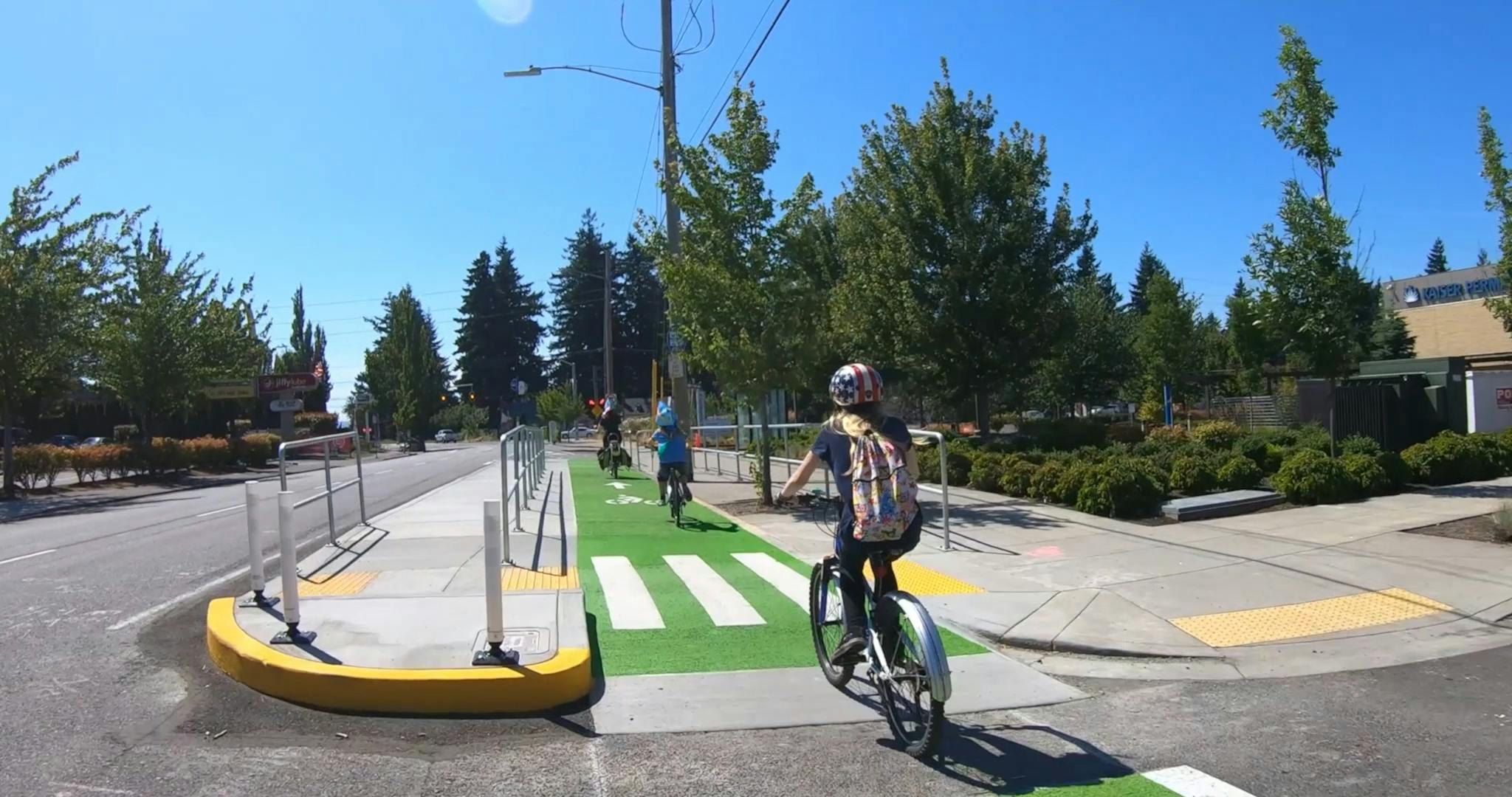
Using Chicago as a case study, we unpack how PeopleForBikes’ SPRINT principles can help cities big and small become great places to ride.
2025 marks the eighth year of PeopleForBikes’ City Ratings, our annual program ranking the quality of bike networks in thousands of cities across the U.S. and around the world. With nearly a decade of data, we’ve used historical results and improvements made to City Ratings scores over time to identify the common threads that great cities for biking share. We unpacked those similarities into six principles known as our SPRINT framework, which any city can leverage to help make biking better in their communities.
SPRINT
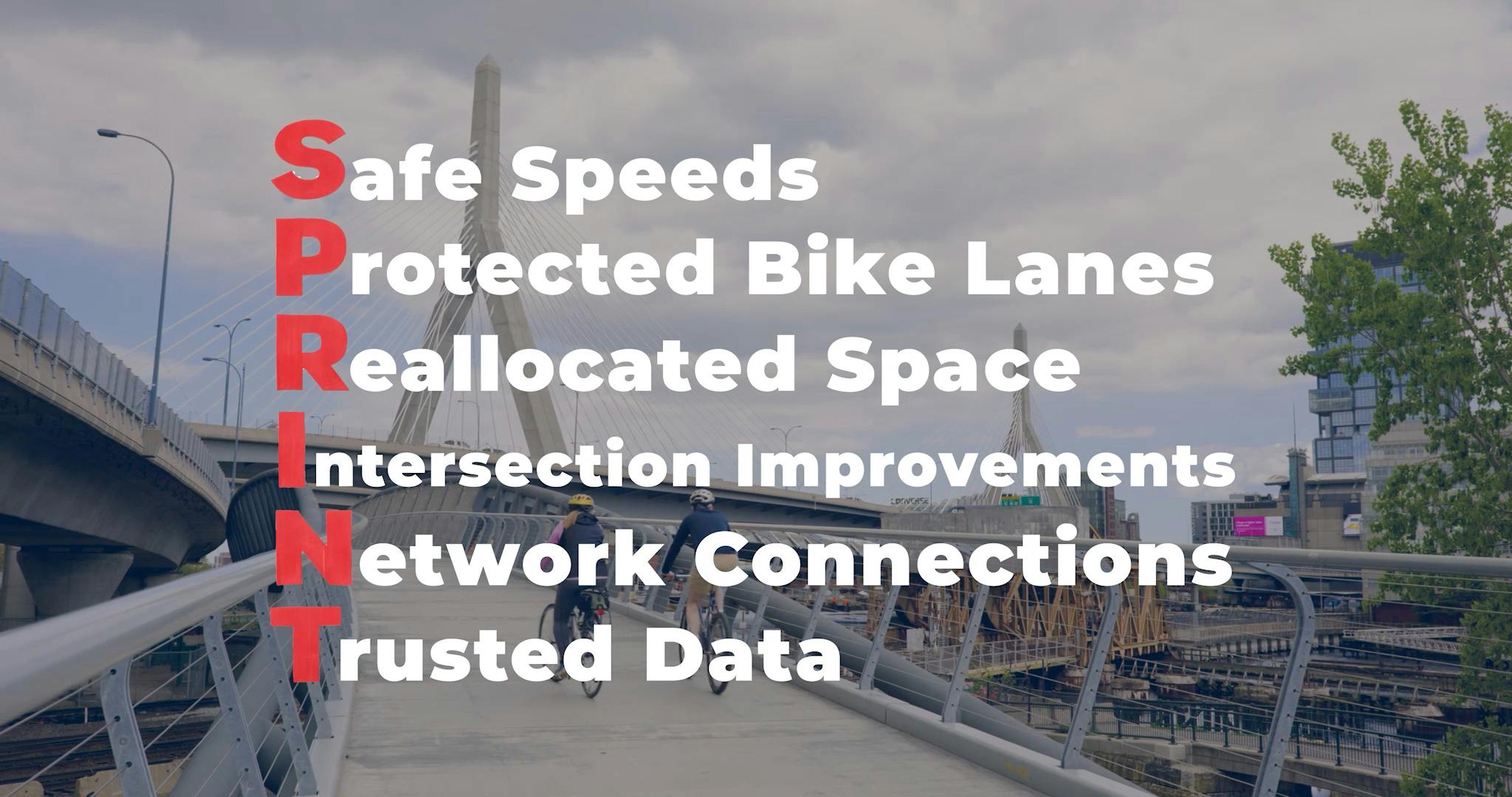
In an effort to help cities and towns of all sizes improve biking and their City Ratings scores using SPRINT, we’re highlighting the city of Chicago, which received a City Ratings score of 11 for 2025, to offer lessons on how to become a great place to bike.
Chicago completed more than 30 bike projects in the past three years but its network remains largely fragmented, with only a modest six-point improvement in its overall score in that same time. Many projects remain disconnected from other parts of the bike network, while dangerous intersections pose a significant safety challenge. In addition, the city’s default speed limit remains higher than ideal for safe, low-stress biking. Recent investments demonstrate encouraging momentum and commitment, but more coordinated action is needed to establish a truly connected, low-stress bike network.
REDUCE SPEEDS
Speed is a leading factor in traffic fatalities across the country, and reducing vehicle speeds is one of the simplest yet most effective first steps to improving road safety for all users.
Recently, a proposal to reduce citywide speed limits in Chicago stalled in a close City Council vote of 28-21. While concerns regarding signage costs and enforcement prevented its passage, local advocates, with the help of PeopleForBikes, are regrouping with a new strategy to move the bill forward. Statewide, Illinois Senate Bill 2070 aims to reduce speed limits in urban areas. This bill is especially important because many of Chicago’s most dangerous roads are state-owned and wouldn't be addressed by city-level legislation alone.
Lessons From High-Scoring Cities: In 2020, Minnesota’s Twin Cities — Minneapolis and St. Paul — reduced speed limits on city streets to 20 mph. Both cities ranked in the top 10 large U.S. cities in this year’s City Ratings, with scores of 72 and 62, respectively. In Hoboken, New Jersey, Mayor Ravi Bhalla launched the city's Vision Zero effort in 2019 with the goal of eliminating all traffic deaths and injuries in the city by 2030. As part of these efforts, Hoboken lowered its citywide speed limit to 20 mph in 2022.
BUILD PROTECTED BIKE LANES
Chicago has put in the work in recent years to build more protected bike lanes, with numerous completed and funded projects included in our National Bike Project Tracker. Unfortunately, intersections remain high-stress and many of these new projects are not connected, both issues that we’ll address later on.
Lessons From High-Scoring Cities: Seattle, which received a 2025 City Ratings score of 66, introduced plans to make many of its protected bike lanes more durable by replacing flexible posts with hardened barrier materials. This work will help improve separation between people biking and driving, reduce ongoing maintenance needs, and strengthen Seattle’s overall bike network.
REALLOCATE SPACE
For years, cities have attempted to solve traffic congestion by widening roads and dedicating more space to car parking. We now know that wide roads and excessive car parking encourage more people to drive, which worsens congestion and air pollution. Wide roads also facilitate speeding, leading to more crashes and serious injuries and fatalities. By rethinking how streets best serve people, city leaders can free up space for other valuable uses like protected bike lanes, wider sidewalks, bus rapid transit lanes, restaurant seating, or trees and benches.
Lessons From High-Scoring Cities: San Francisco (2025 City Ratings Score: 63) improved safety along California Street by reducing a four-lane roadway down to three, also known as a road diet. California Street is part of the city’s Vision Zero High-Injury Network that consists of the 13% of all San Francisco streets that account for 75% of severe and fatal collisions in the city.
IMPROVE INTERSECTIONS
Many crashes that occur between people driving and biking happen at intersections — in 2022, more than 40% of urban bike fatalities in the United States occurred at intersections. Chicago has several examples of places that would greatly benefit from protected intersections.
Lessons From High-Scoring Cities: Completed in fall of 2023, the 30th Street and Colorado Avenue protected intersection in Boulder, Colorado (2025 City Ratings score: 70) provided much needed safety, accessibility, and mobility improvements to one of the city’s busiest intersections. Learn more about the importance of protected intersections and how to build them with this resource from NACTO.
ENHANCE NETWORK CONNECTIONS
Many of Chicago’s new protected bike lanes don’t connect to other parts of the city’s bike network, creating fragmented segments that don’t safely allow people to travel to everyday destinations by bike.
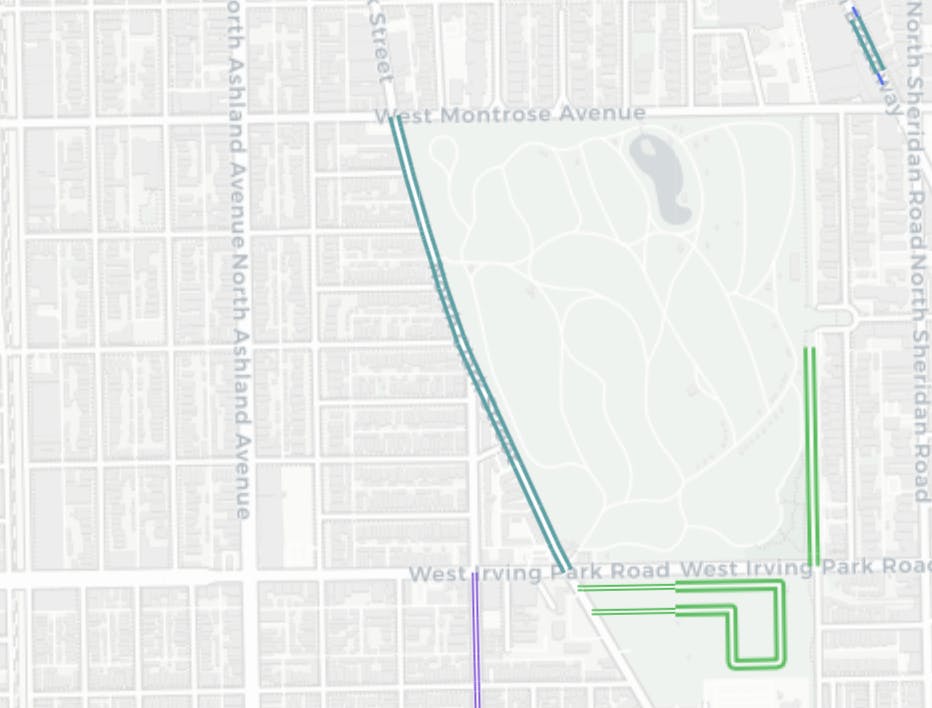
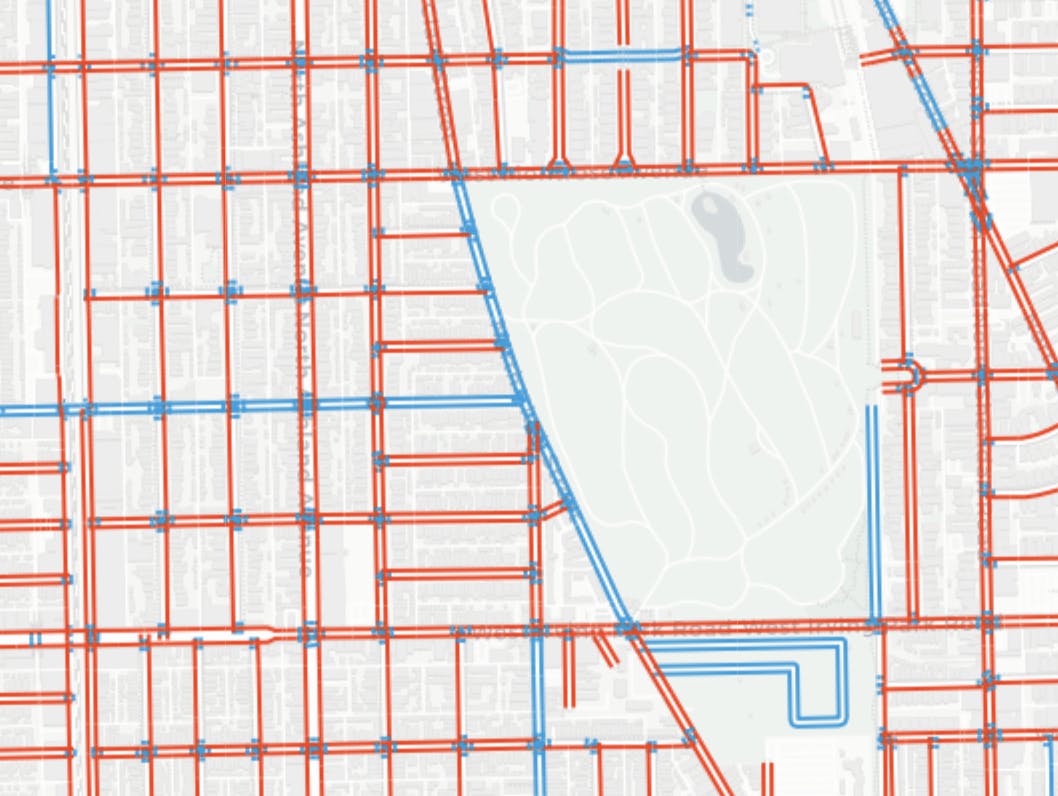
A protected bike lane on Clark Street begins and ends on a high-stress road, making it difficult to connect to other parts of Chicago’s bike network.
Lessons From High-Scoring Cities: In Minneapolis (2025 City Ratings score: 72), the city’s bike plan is based around the construction of an all ages and abilities bike network, with specific plans to implement bikeway connections to and between regional destinations and adjacent city networks.
TRUSTED DATA
Since no federal or state standards for cataloging and measuring bicycling infrastructure exist in the U.S., City Ratings relies on OpenStreetMap to measure the quality of a city’s bike network. Greater accuracy in OpenStreetMap data leads to a more accurate City Ratings score and can help cities determine benchmarks for success and improvement. Learn how you can help improve the accuracy of OpenStreetMap data for your city here.
Lessons From High-Scoring Cities:
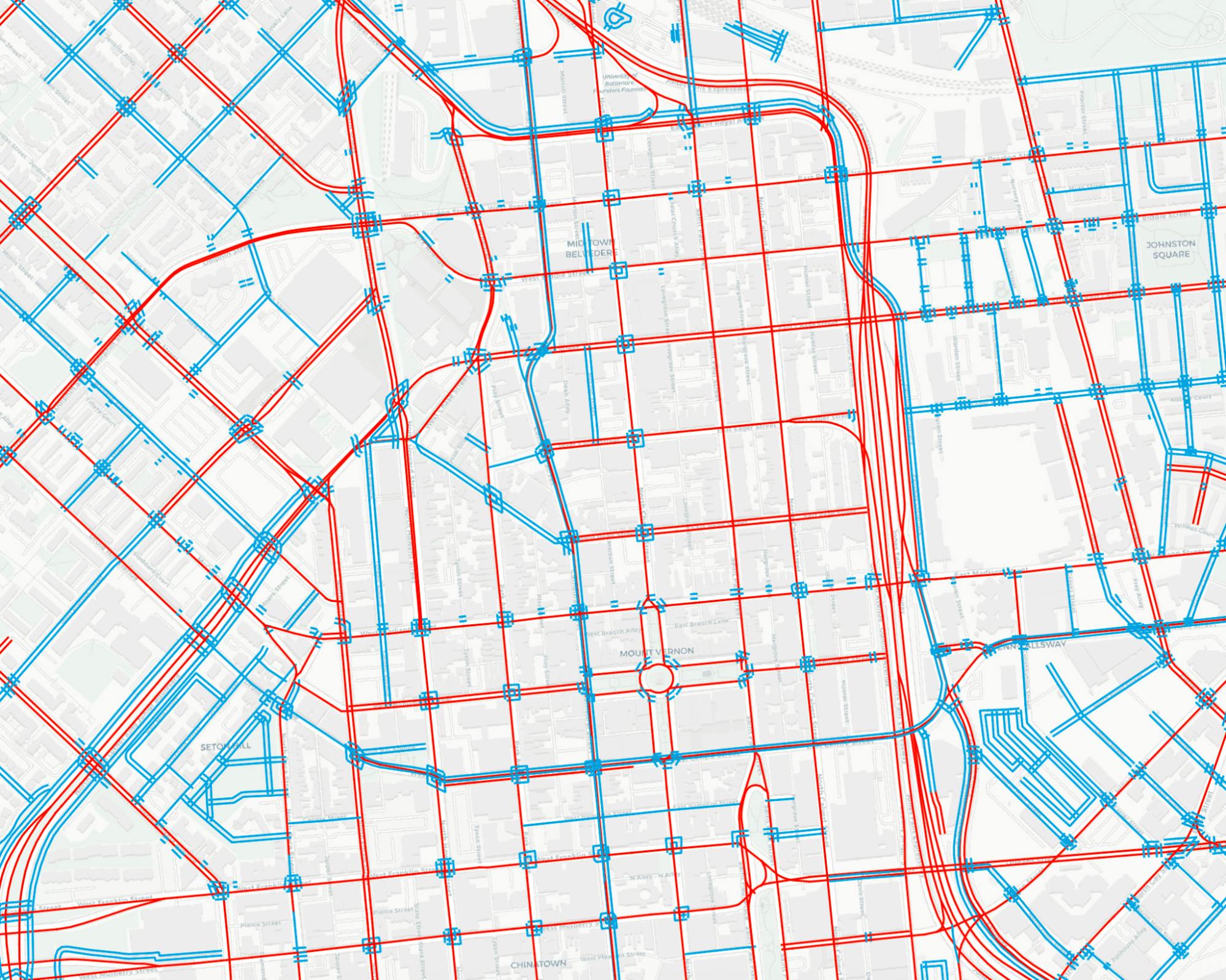
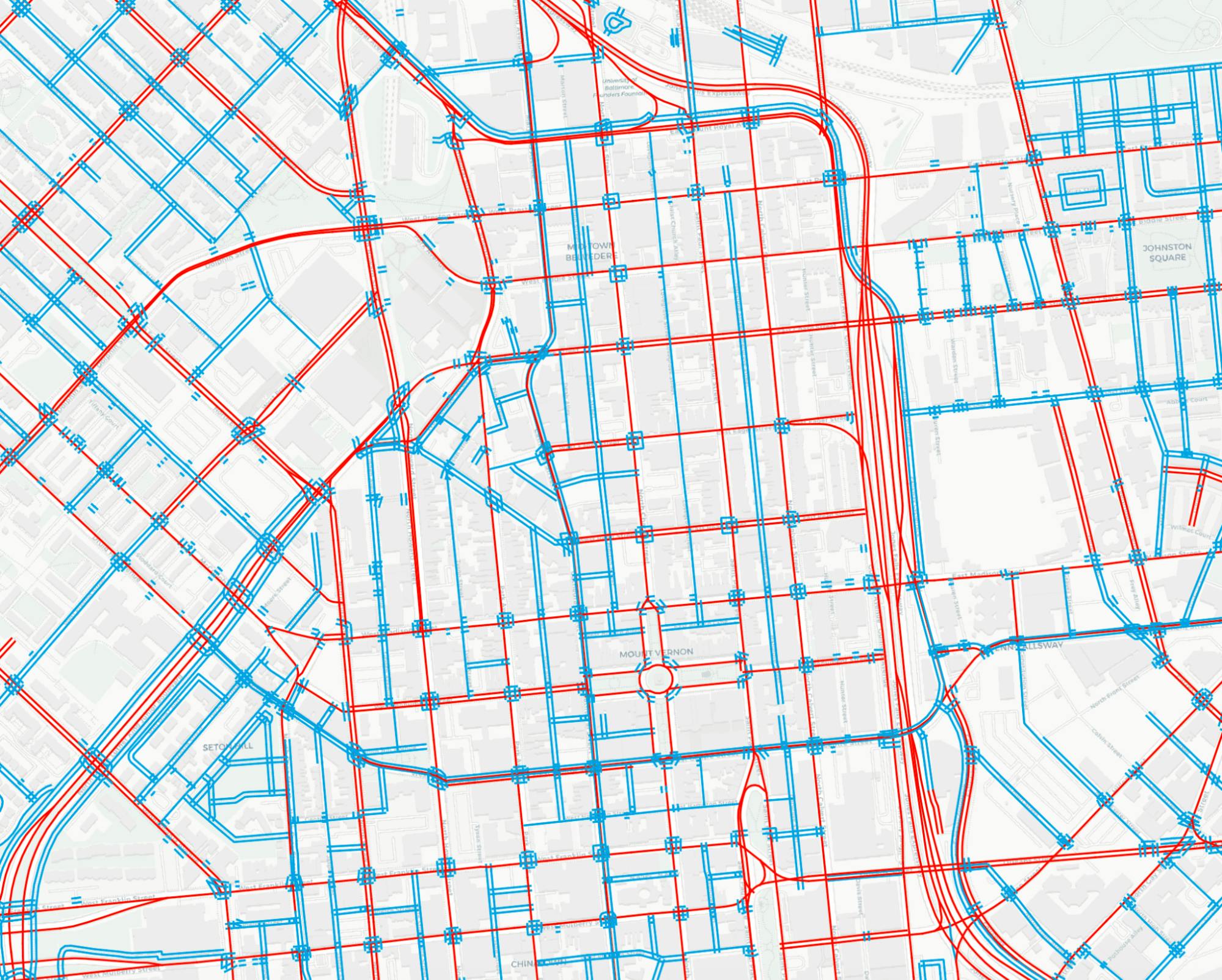
Between 2024 and 2025, Baltimore updated OpenStreetMap data for numerous service roads citywide, adding more low-stress routes to its network. This updated data helped Baltimore improve its City Ratings score from 31 in 2024 to a score of 41 in 2025.
Related Locations:

Take Action

Donate Now
Bring Better Biking to Your Community