
How World Cup Host Cities Can Move Millions By Bike
By: Martina Haggerty, Vice President of Infrastructure
2026 World Cup host cities from Los Angeles to Boston can reduce congestion with quick-build bike lanes, Open Streets, bike share, and better bike parking. Here’s how they can move quickly to help millions of fans get around their cities efficiently.
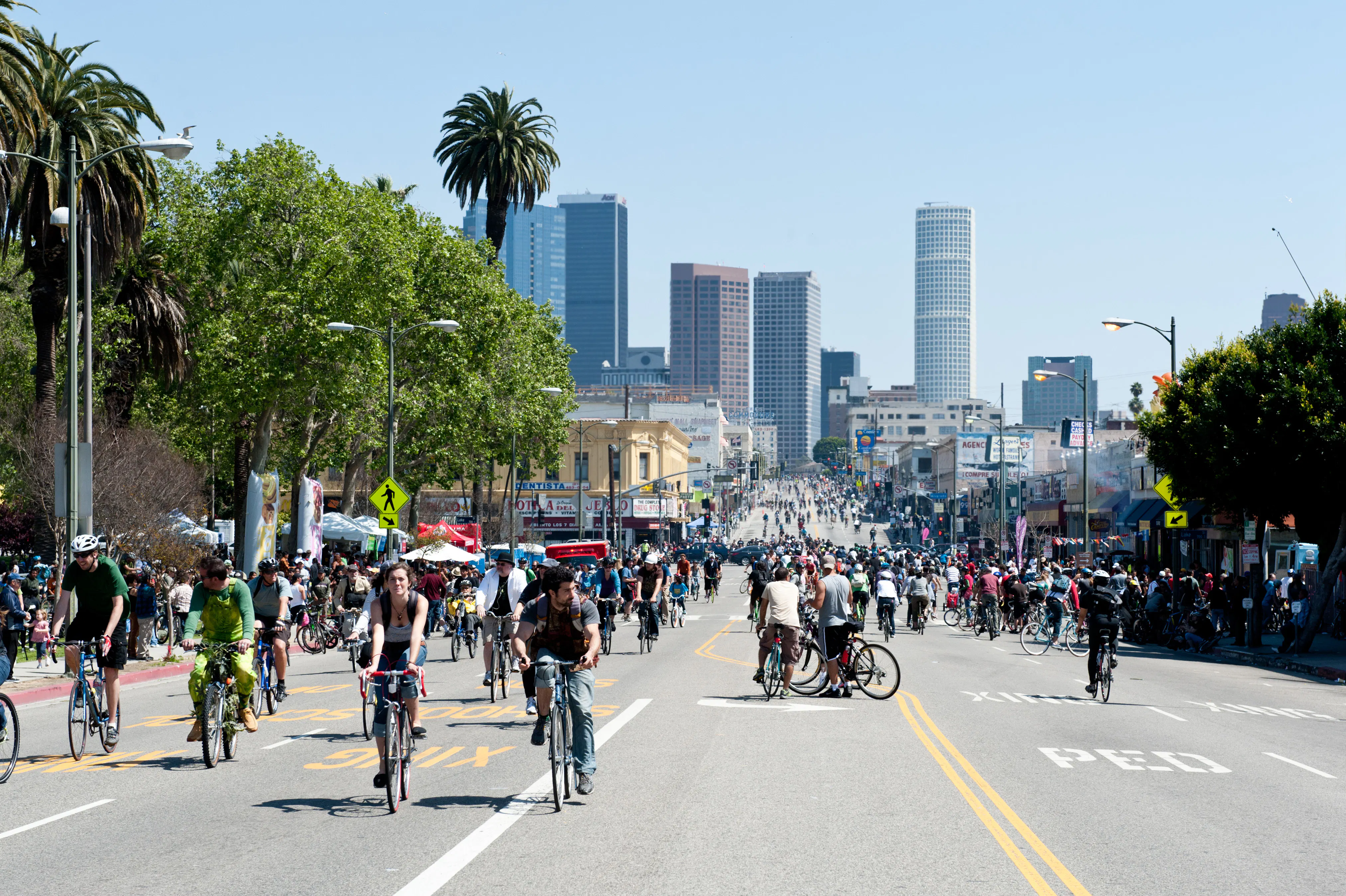
CicLAvia in Los Angeles highlights the potential of Open Streets to create people-centered corridors.
When the 2026 World Cup arrives in the United States, host cities will face a familiar problem at an unfamiliar scale: how to move hundreds of thousands of people to and from matches without grinding to a halt. More lanes for cars won’t solve it. They never do.
What will help? A fast, visible multimodal transportation network that lets people move efficiently over short distances — by bike, on foot, and via transit. Thankfully, cities don’t need years or billion-dollar projects to make this happen. Even with the World Cup just weeks away, cities can use smart planning and quick-build tools to quickly deliver game-ready bike networks.
From Los Angeles to Atlanta to Boston, U.S. host cities have a once-in-a-generation opportunity to move millions of fans more efficiently. While matches will be played in a handful of official host cities, surrounding communities — like Newark, Pasadena, and Fort Lauderdale — will also absorb a surge of visitors and need to plan accordingly.
Build a Game Day Network
Start with the trips people will actually take between hotels, transit hubs, fan zones, and stadiums. Map those connections first and focus on continuity over perfection. To help visitors understand the network, cities should publish a simple, highly visible “Bike to the Match” network map that links stadiums and official fan zones, hotels and visitor districts, major transit stations, and key neighborhood corridors. The goal is to create a clear, connected network that works on day one.
The network shouldn’t stop at city limits. Hotels, short-term rentals, and fan activity will spread across metro regions, putting pressure on smaller cities and towns that may be less prepared. Building connected bike networks across jurisdictions can help distribute demand and reduce congestion everywhere.
While not everyone will choose to ride a bike, multimodal improvements like a cohesive bike network will help reduce traffic congestion for those who still choose to drive.
Bonus: These same improvements reflect the kind of low-stress, connected bike networks that drive stronger City Ratings scores.
Use Open Streets to Create Instant Capacity and Turn Streets Into Fan Zones
The most successful World Cup host cities won’t just move crowds, they’ll turn streets into part of the experience.
One of the fastest ways to expand capacity is to open key streets to people walking and biking. Open Streets programs like CicLAvia regularly draw tens of thousands into people-centered corridors. For the World Cup, cities can use the same playbook on match days and high-traffic weekends to create safe, high-capacity routes to stadiums and fan zones. To do so, cities should focus on priority corridors, temporarily closing them to through traffic while allowing biking, walking, and limited local access, as well as staffing them with clear wayfinding and traffic management.
These corridors can also function as linear fan zones that bring the city to life with vendors and local businesses, music and live programming, watch parties, and sponsor activations.
Fans arrive together — by bike, on foot, or via transit — already immersed in the atmosphere instead of stuck in traffic. Businesses along the route see increased foot traffic, and cities gain a flexible, low-cost way to manage crowds. When done right, Open Streets don’t just solve congestion, they turn mobility into a signature part of the World Cup experience.
Fill Gaps With Quick-Build Bike Lanes
Not every street can be fully opened to people walking and biking. That’s where quick-build infrastructure comes in. Using paint, posts, and temporary barriers, cities can install protected bike lanes in a matter of weeks. Cities should focus on connecting Open Streets corridors to one another, linking neighborhoods to the main network, and creating safe access to transit hubs.
Cities can also treat these routes as real-world pilot projects — tracking ridership, safety, and usage to identify which corridors should become permanent improvements after the World Cup.
Make It Comfortable for First-Time Riders
World Cup visitors won’t be transportation experts. Many will be navigating a new city for the first time. That makes comfort and clarity essential:
- Separate bike space from vehicular traffic wherever possible.
- Simplify intersections with clear markings.
- Use bold, consistent wayfinding so routes are easy to follow.
- If it feels safe and intuitive, people will use it. If it feels confusing or dangerous, they won’t.
Expand Bike Share
Cities need to meet the demand that will come from an influx of visitors who do not have their own bikes with them. That means quickly scaling up bike share systems by adding more bikes; installing temporary docking stations near stadiums, transit hubs, hotel hubs, and fan zones; and promoting simple, short-term passes for visitors.
Hotels and event organizers can help promote access, making bike share the easiest option for short trips.
Get Bike Parking Right
Even the best network fails without a secure place to park. Host cities should treat bike parking as essential infrastructure with large, staffed bike valet areas at stadiums, temporary racks at fan zones and along major routes, and clear signage so people know where to go. When bike parking is easy and secure, more people choose to ride, whether they’re heading to a stadium, stopping at the grocery store, or visiting a local park.
As more Americans use e-bikes, cargo bikes, and shared micromobility options, cities must also consider bike parking that works for a wide range of riders and devices, including visible racks outside of neighborhood businesses, bike corrals that replace a single car parking space, secure bike rooms at apartment buildings, and longer-term weather-protected parking near transit stations and downtown job centers.
Connect to Transit
Biking works best when it’s an integrated part of a larger system. Open Streets and bike routes should feed directly into transit stations, making it easy to combine transportation modes. This approach expands the reach of transit and reduces pressure on any single system.
Use the World Cup as a Launchpad
The most important decision cities can make is to treat these changes as more than temporary. Quick-build lanes can become permanent. Open Streets corridors can evolve into recurring programs that help community members come together and experience the joy of riding a bike. Bike share expansions can serve residents long after the final match. While the World Cup is a deadline, it’s also an opportunity to accelerate projects that cities already need.
The cities that get this right will show the rest of the country what’s possible when streets are designed for people, with the opportunity to leave behind something even more valuable than a successful global event: a multimodal transportation system that serves residents and visitors for years to come.
The 2026 World Cup is a rare chance to transform mobility in cities nationwide. PeopleForBikes is here to help get it right. We can provide the resources to turn temporary, game day infrastructure into permanent, world-class networks. Don't let the momentum stop at the final match. Contact PeopleForBikes at info@peopleforbikes.org to learn how we can support your city’s journey toward a safer, more connected future.

Take Action

Donate Now
Bring Better Biking to Your Community