

A $10,000 Investment is Transforming the Way St. Louis Moves
By: Martina Haggerty, Vice President of Infrastructure
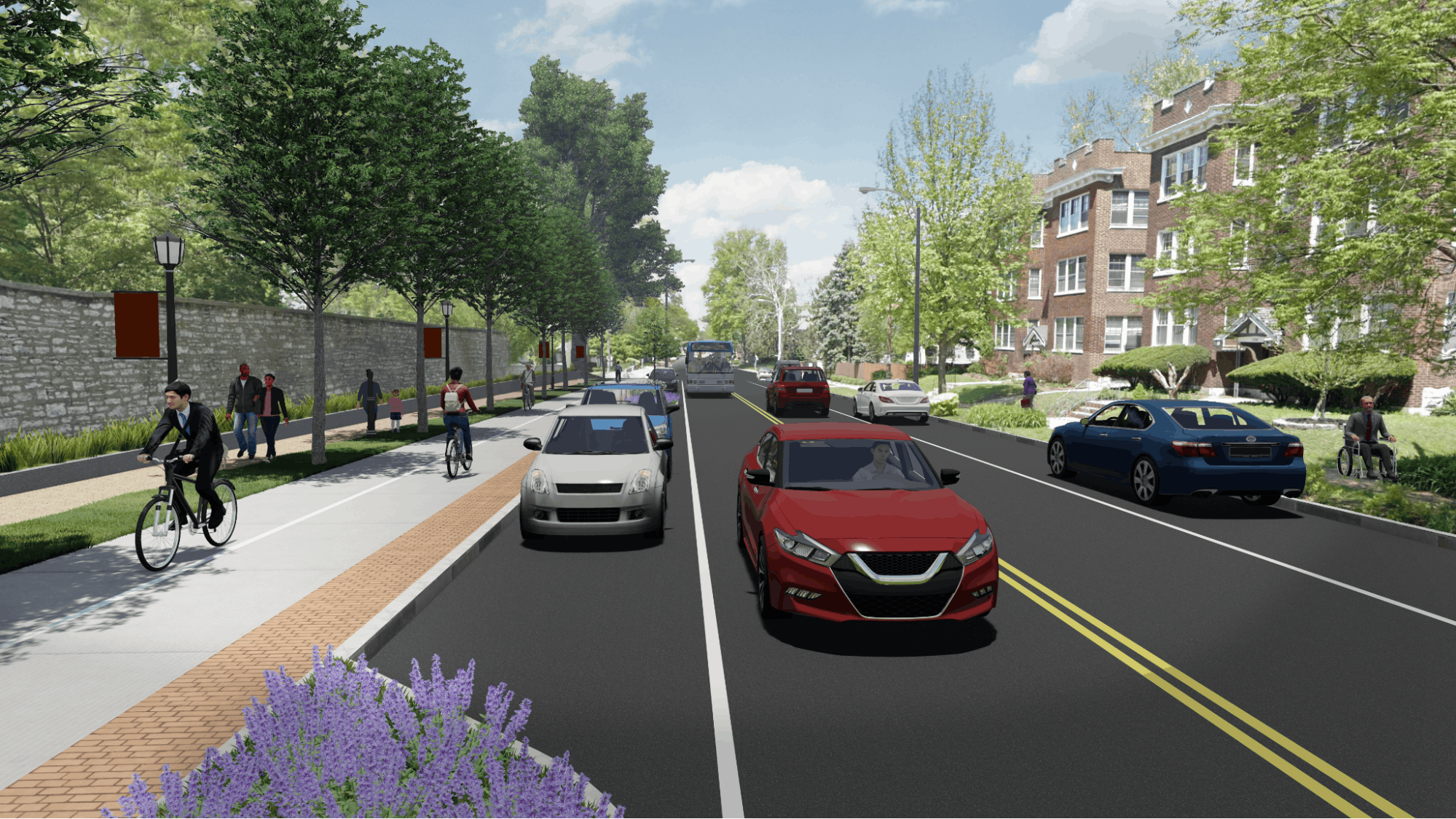
In partnership with the local nonprofit Trailnet, PeopleForBikes’ $10,000 investment is supporting a citywide campaign to build a safe, connected bike network for people of all ages and abilities.
Trailnet’s vision for a connected bike network linking neighborhoods, jobs, parks, and other destinations is becoming a reality as projects like the Tower Grove Connector break ground across the city. (Image courtesy of Trailnet).
In 2018, PeopleForBikes invested $10,000 in a citywide campaign to build a safe, connected bike network for people of all ages and abilities in St. Louis, Missouri. Led by Trailnet — a St. Louis-based nonprofit working to make walking and biking a way of life through better infrastructure, education, and advocacy — the effort is now transforming how residents and visitors move around the city.
St. Louis is one of dozens of U.S. cities using PeopleForBikes’ resources to guide investments that make biking safer and more efficient for everyday travel.
Trailnet’s Connecting St. Louis Plan created a bold, community-driven vision for a connected, low-stress bikeway network linking neighborhoods, jobs, parks, transit, and other key destinations. Today, that vision is shifting from advocacy to on-the-ground change.
“When we released the Connecting St. Louis Plan in 2019, we wanted to spark momentum,” said Chantal Incandela, Trailnet’s director of marketing and communications. “We’re now seeing that momentum turn into concrete, protected infrastructure that truly changes people’s everyday experience of moving through the city.”
Expanding St. Louis’ Low-Stress Bike Network Downtown
Construction recently began on the Tucker Boulevard Cycle Track, a two-way protected bike lane stretching nearly one mile through downtown St. Louis from Washington Avenue to Chouteau Avenue. More than just a bikeway, the redesign organizes the corridor to be safer and more comfortable for people walking, biking, taking transit, and driving.
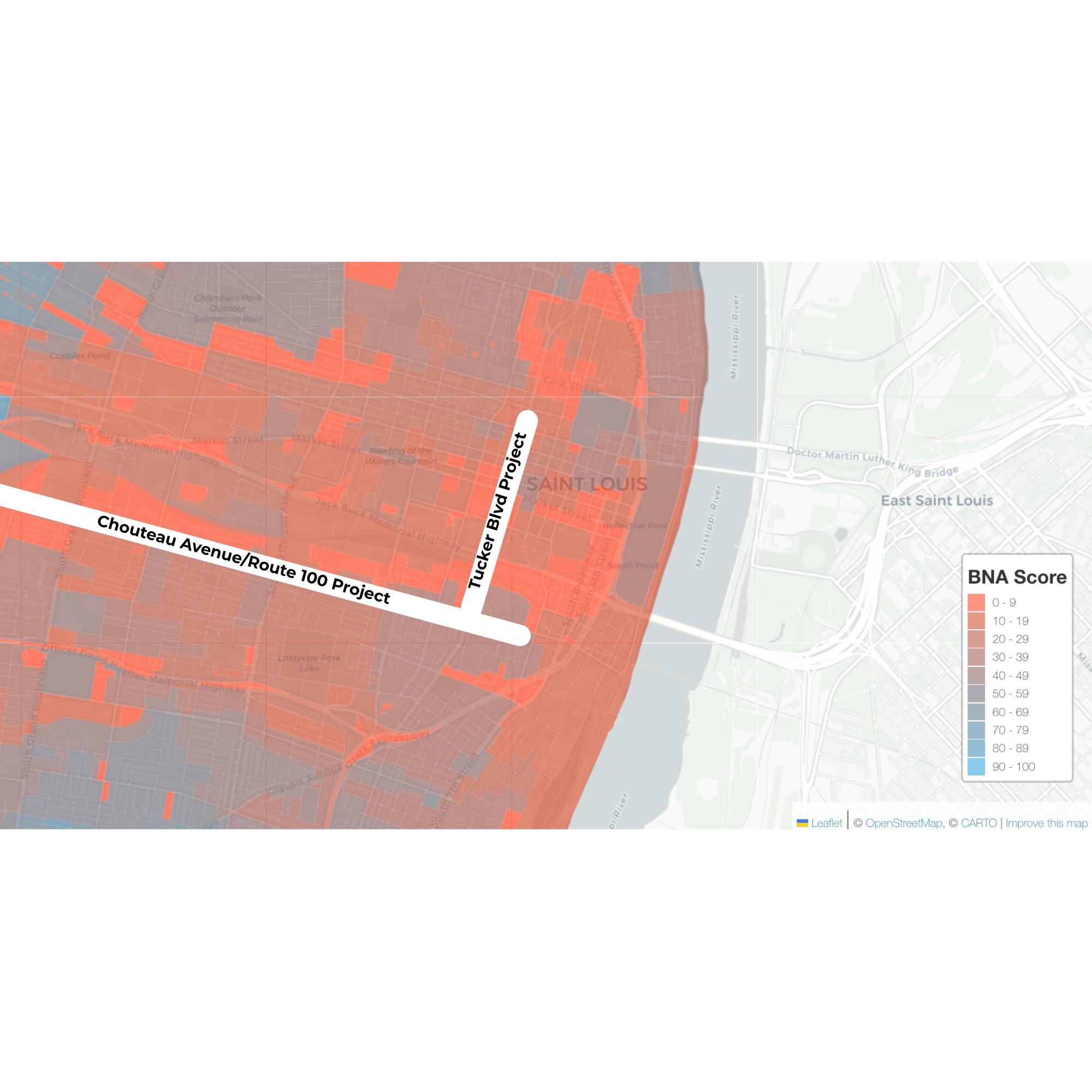
Projects like Tucker Boulevard play an important role in expanding and connecting St. Louis’s low-stress bike network. Progress in St. Louis and thousands of other communities is tracked through PeopleForBikes’ Bicycle Network Analysis (BNA), the data tool that powers our City Ratings program and measures how easy it is for people to get where they need to go by bike.
The City of St. Louis is implementing the project using federal Transportation Alternatives Program funding, with design, community engagement, and advocacy support from Trailnet. Once completed in spring 2026, the Tucker corridor will connect seamlessly to the Chestnut Street bike lanes, improvements on Chouteau Avenue, and the emerging Brickline Greenway, which has at least 30 segments in various stages of planning and construction, forming a critical spine of the growing citywide bike network.
“These projects are visible proof that St. Louis is prioritizing people over speed,” said Incandela. “They show residents and visitors that our streets are meant for connection — not chaos.”
MoDOT’s First Protected Bike Lane Expands St. Louis’ Bike Network
The momentum for safer biking extends beyond city streets. The Missouri Department of Transportation (MoDOT) is constructing its first-ever protected bike lane on Chouteau Avenue/Route 100, identified as a high-priority corridor in Trailnet’s Connecting St. Louis Plan.
Spanning six miles between Broadway and the city limits, the $7 million project addresses significant safety concerns: more than 1,500 crashes have occurred on this stretch in the past five years. It also connects to other projects like Tucker Boulevard and the Tower Grove Connector — a 1.8-mile protected cycle track that will connect Tower Grove Park with a redevelopment project that is turning underutilized land into a 200-acre innovation district.
The redesign includes narrower driving lanes to reduce speeding, upgraded pedestrian crossings, new medians, and protected bike lanes separated from traffic by curbs and parking.
Building Community, Confidence, and Connection
Community response has been overwhelmingly positive. Residents shared that safe, protected routes are what they’ve been waiting for— a reason to choose biking for everyday trips. Local businesses, engaged throughout the planning process, see calmer, people-friendly streets as good for local businesses and neighborhoods.
“We’ve heard from residents that the lack of safe bike infrastructure has been the biggest barrier to biking downtown,” said Incandela. “These projects are a game-changer. They create real, comfortable choices for getting around.”
Importantly, the growing network is connecting communities harmed or divided by past roadway decisions. Combined with neighborhood-scale efforts like Louisiana Calm Street, Safe Routes to School programs, and the 20th Street Project Connect, these projects are expanding access to opportunity for all across the city.
“Students, downtown workers, and families will now have safer ways to get to school, to work, to transit, or simply to enjoy the city together,” said Incandela. “This is about joy and freedom as much as infrastructure.”
What’s Next for St. Louis
As construction continues, Trailnet is partnering with city agencies to support maintenance efforts like “Archie,” the city’s new bike-lane cleaning vehicle dedicated to keeping protected lanes safe and usable year-round, and public engagement campaigns to help community members learn how the growing network benefits everyone, including drivers.
“We’re building not just infrastructure, but a multimodal culture,” Incandela emphasized. “We’re working toward a St. Louis where choosing to walk, ride, or roll feels normal, intuitive, and joyful.”
What began as a grassroots campaign with early support from PeopleForBikes is now shaping the future of transportation in St. Louis — influencing city departments, state agencies, funding priorities, and long-term planning to ensure that St. Louis is a city where people can move safely and confidently, no matter how they travel.
Want to learn about similar projects near you? Check out PeopleForBikes’ Bike Project Tracker to explore bike lane and trail projects making biking safer and more connected in communities nationwide.
Related Locations:

Take Action

Donate Now
Bring Better Biking to Your Community