

New Study Highlights Recent Decline in Pedestrian Deaths, But More Work to Be Done
By: Jack Foersterling, editorial content manager
The Governor’s Highway Safety Association’s latest report breaks down pedestrian fatality data by state and offers key insights on how we can make streets safer for everyone.
A new report from the Governor’s Highway Safety Association (GHSA) — Pedestrian Traffic Fatalities by State: 2024 Preliminary Data — shows that pedestrian deaths in the U.S. declined for the second straight year, but the findings still deliver a stark reminder: there is still work to be done to make streets safer for everyone in communities nationwide.
Key Findings From the Study
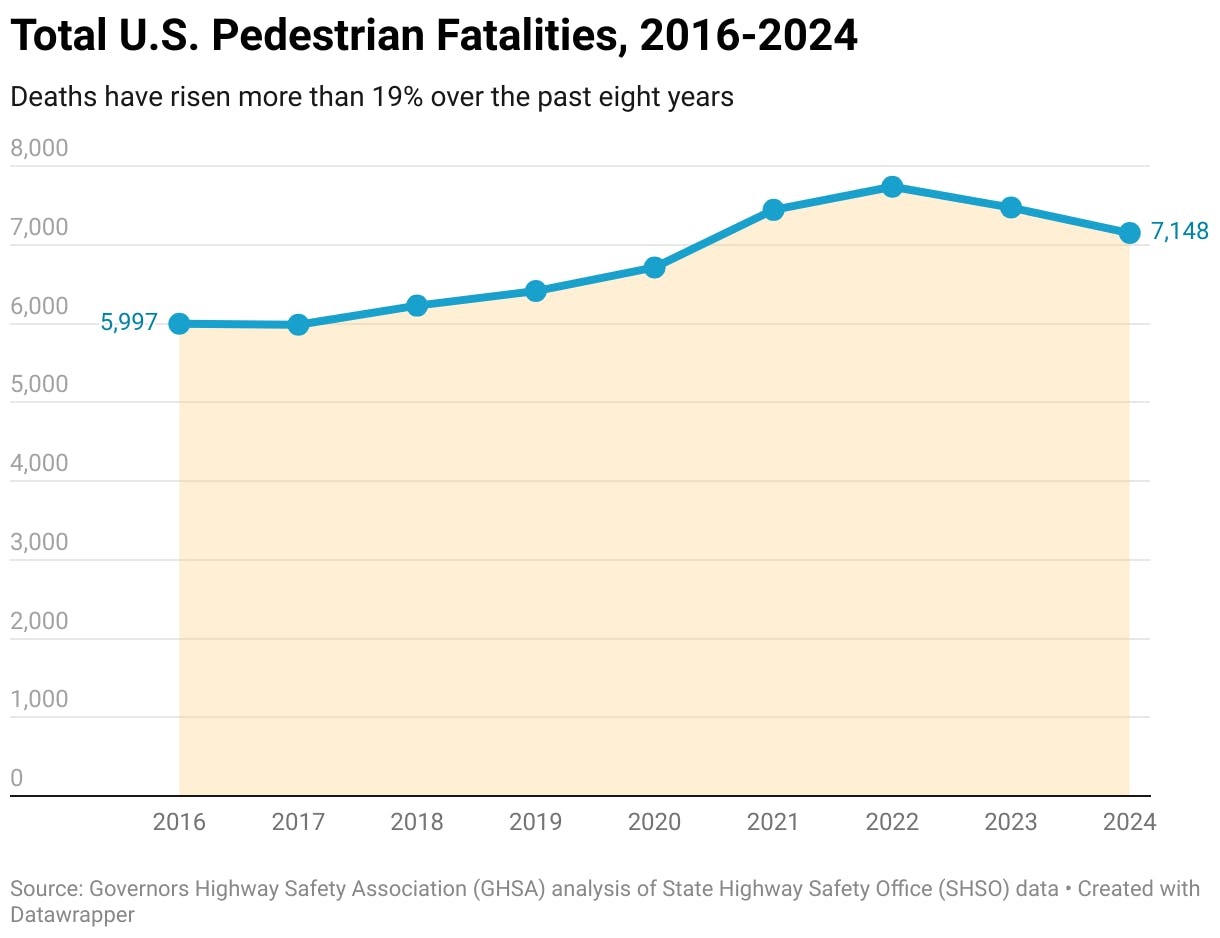
- Drivers struck and killed 7,148 people in the United States last year, enough to fill 31 Boeing 737s. While fatalities were down 4.3% compared to 2023, they were up 19.2% over 2016 and reached a 40-year high in 2022.
- Pedestrian deaths are increasing at a rate far faster than overall traffic fatalities. Between 2009 and 2023, pedestrian deaths rose a staggering 80%, while all other traffic fatalities increased 13%.
- More than three-quarters of pedestrian fatalities occur after dark. The share of nighttime deaths has skyrocketed recently. Fatal pedestrian crashes at night rose 84% between 2010 and 2023, compared to a 28% increase in daytime fatalities.
- Nearly two-thirds (65%) of pedestrian deaths occurred in locations without a sidewalk in 2023. Sidewalks (and other infrastructure like multi-use paths and protected bike lanes) can help protect people walking and biking by providing a physical separation between them and motor vehicle traffic, but they are missing or in poor condition in many parts of the country.
While this recent modest decline in pedestrian fatalities is positive news, deaths are still up nearly 20% over 2016 and urgent action is needed to keep all people safe — no matter how they choose to travel. In order to make our vision for zero pedestrian fatalities a reality, the GHSA suggests doubling down on proven practices: Improved education efforts, effective law enforcement practices, and expanded infrastructure improvements.
PeopleForBikes is working to give everyone safe, fun, and connected places to ride a bike, and improved road safety for people walking and biking goes hand in hand:
- Streets with protected bike lanes experience up to 90% fewer injuries per mile compared to those without bike infrastructure
- Cities with protected bike lanes see 44% fewer fatalities for all road users and 50% fewer serious injuries
- Adding bike lanes to streets can reduce crashes by as much as 49%.
Our annual City Ratings program ranks cities on the safety and connectivity of their bike networks and gives local leaders and advocates the tools and resources to identify areas for improvement and make dedicated investments in safer places to ride. New this year, City Ratings also features an interactive map and database of thousands of planned and proposed bike projects across the U.S., growing support for infrastructure projects that will make a big difference in improving safety for all road users, not just people riding bikes.
PeopleForBikes also works at all levels of government advocating for policies and legislation that increase funding for bike and pedestrian infrastructure, create laws that make biking safer, and allow more people to choose alternative transportation for their daily travel needs.
You Can Help Make a Difference
- Check out your community’s City Ratings score and use our Bicycle Network Analysis map to see where improvements can be made.
- Find bike projects to support in your community that will make walking and biking easier and safer.
- Sign up for PeopleForBikes’ advocacy alerts to learn how you can take action for safer streets by supporting new funding opportunities, policy changes, and infrastructure investments.

Take Action

Donate Now
Bring Better Biking to Your Community