
PeopleForBikes Backs National Park Service Proposed Rule to Streamline Bike Access
By: Rachel Fussell, Director of Recreation Policy
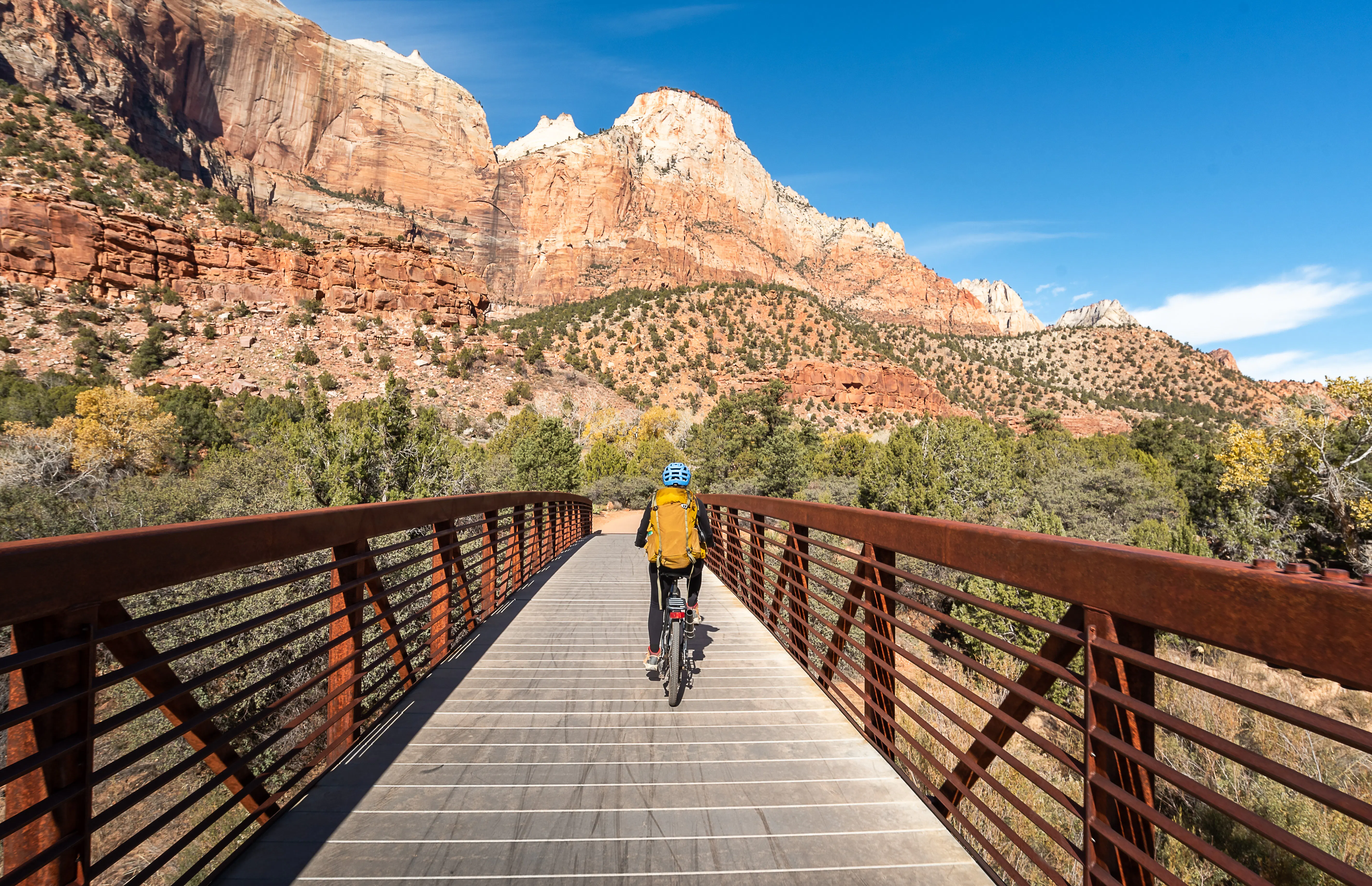
Our formal comments support matching review to impact, consistent e-bike rules on park roads, and decisions grounded in research.
Today, adding a short, paved bike connector in a national park can require the same review as building a major new trail. That burden is so heavy that some parks don’t act at all. A proposed National Park Service (NPS) rule would change that. On November 2, PeopleForBikes submitted formal comments supporting the proposal and offering recommendations to make sure the rule works well for parks, visitors, and the resources that make these places special
Bicycling is the most popular form of active recreation in the National Park System after hiking and walking. Under the current rules, however, nearly any decision about bike access requires the same layers of review, including an environmental assessment or impact statement, a separate planning document, and a written determination, whether a park is considering a short paved connector or a major new trail.
Those requirements take staff time and budget that could go toward other priorities, like trail maintenance and visitor facilities. In some cases, the NPS has noted that this burden leads parks not to act at all. It can also slow coordination with regional trail networks, like the Marquette Greenway in Indiana, which will connect nearby communities to Indiana Dunes National Park.
The proposed rule aims to match the level of review to the likely impact of a decision, so lower-impact projects can move through the approval process more efficiently while significant or controversial ones still receive deeper analysis and public involvement.
PeopleForBikes’ public comments focused on five main areas:
- Matching review to impact, while keeping public input where it matters most. PeopleForBikes supports allowing parks to use categorical exclusions, an established environmental review tool, for bicycle decisions, as they already can for other types of recreation. At the same time, these are public lands, and the public deserves a voice when a decision could significantly change how a park is used. We support the rule’s approach of keeping more rigorous procedures for those decisions, and we asked the NPS to provide clear guidance on how categorical exclusions would apply so implementation is consistent across parks.
Consistency on roads and parking areas. We support allowing e-bikes on park roads and parking areas already open to motor vehicles, without separate authorization. This would align park rules with state and local laws and reduce confusion for riders and park staff.
Decisions grounded in research. Federal studies have found that e-bikes and traditional bikes have similar impacts. The NPS’s own programmatic assessment found no significant difference in impacts to soils or wildlife, and it noted that trail design matters more than the type of use. Similar findings have come from the Forest Service in Tahoe National Forest and from a Federal Highway Administration field study of trail speeds. Based on this research, we noted that Class 1 pedal-assist e-bikes are generally appropriate on trails where traditional mountain bikes are already allowed, absent site-specific concerns.
Clarifying when rulemaking is required. The proposal would require formal rulemaking for bike access in locations “never improved by artificial or processed materials.” Because most trails include features like bridges or steps, we’re concerned the standard could be difficult to apply. We recommended relying on the impact-based criteria already in federal regulations (36 C.F.R. § 1.5(b)), so the decision turns on a project’s actual effects.
Preserving local decision-making. Superintendents know their parks best. We support the rule’s preservation of their authority to limit, restrict, or close areas to bikes or e-bikes, including by class, to protect resources, safety, and the visitor experience.
Why Bike Access Matters
Access to parks and public lands by bike supports public health. Cycling is associated with lower rates of chronic disease and improved mental health, and e-bikes can help older adults, people with disabilities, and newer riders stay active outdoors.
Additionally, e-bikes are also becoming useful tools for park staff. Crews at Isle Royale National Park in Lake Superior use electric cargo bikes to get around, Florida state park rangers use them to reach remote areas and monitor wildlife, and rangers near Pikes Peak in Colorado use them to access places they can’t access by car.
National parks serve many people in many ways, and we recognize that visitors and partners hold a range of views on how bikes fit into them. PeopleForBikes’ goal is a process that’s efficient for lower-impact decisions, thorough for significant ones, and grounded in research and local knowledge. We appreciate the NPS’ work on this proposal and look forward to continuing the conversation as the agency reviews public comments.
Read our full comments here.

Take Action

Donate Now
Bring Better Biking to Your Community