

2026 Is Already a Big Year for Bike Access and Recreation Policy
By: Rachel Fussell, Director of Recreation Policy
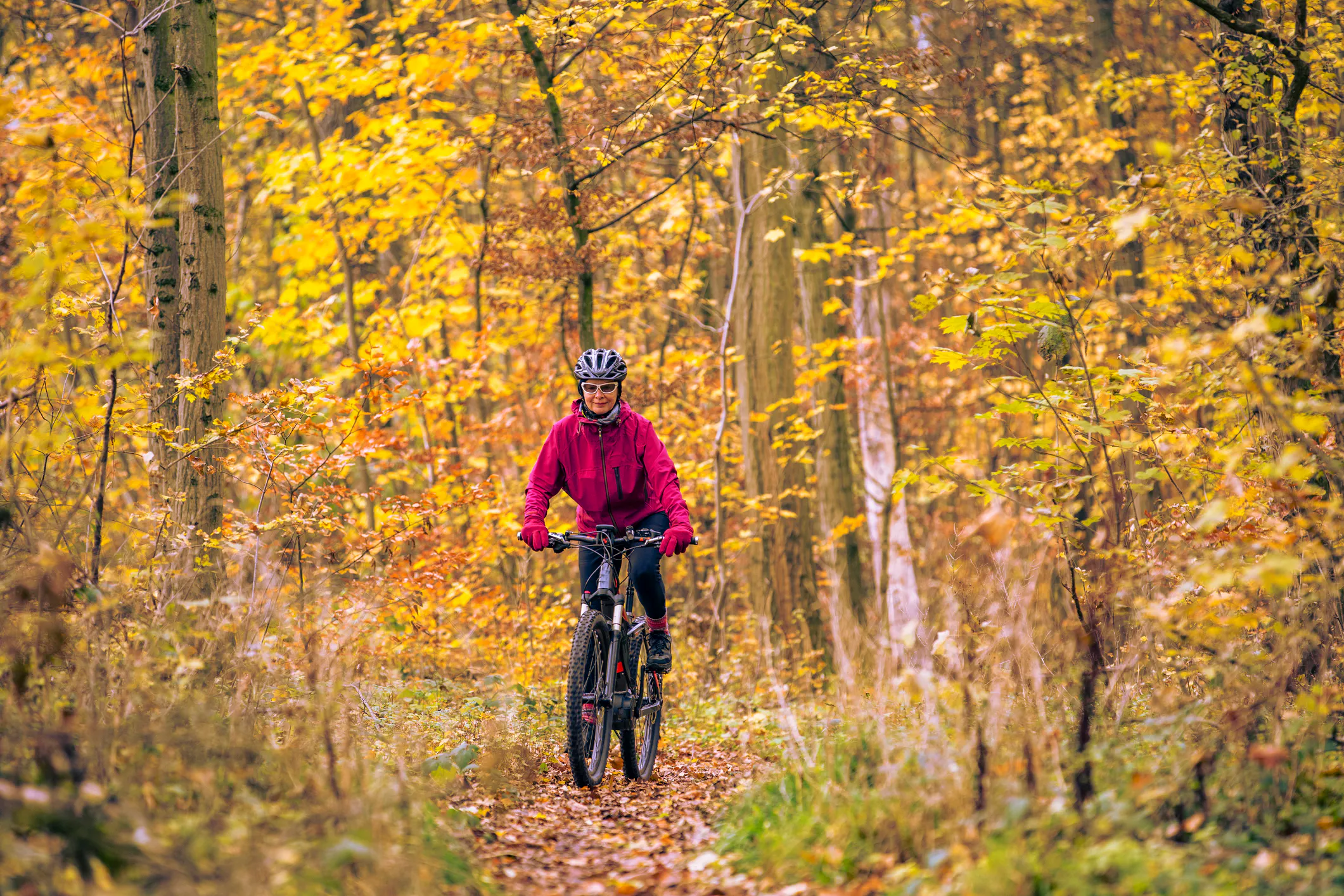
PeopleForBikes is racking up wins on recreation, trail funding, and liability reform — including more than 9,500 miles of potential trails opened to Class 1 eMTB access in play for 2026.
PeopleForBikes is on pace for another record year of policy wins, with hard work paying off in state legislatures and national forests across the country. Here's what our team has been working on so far in 2026 and what's still in motion.
Building on a Record 2025
2025 was the biggest single-year expansion of electric mountain bike (eMTB) access to date. PeopleForBikes helped open 17,000 new miles of trails to Class 1 eMTBs across the United States last year, more than doubling access in some regions almost overnight.
The headline win came in Moab, Utah, where the Bureau of Land Management approved Class 1 eMTB access on 211 miles of world-renowned mountain bike trails, effective March 1, 2026. Oregon's Deschutes National Forest opened 161 miles across 67 trails, and the Lake Tahoe Basin Management Unit in California added 106 miles of existing trails plus 25 miles of new construction. South Dakota's George S. Mickelson Trail also opened 109 miles of scenic riding through the Black Hills to Class 1 eMTBs.
Building on that foundation, PeopleForBikes continues to fight for mountain biking and eMTB access in 2026, as well as advocate for model legislation that draws a distinct line between low-speed electric bicycles and high-powered electric motorcycles (e-motos).
- Washington's SB 6110 passed, updating state law so electric-assisted bicycles are capped at 750 watts and must fit one of three established classes. PeopleForBikes' e-moto model language served as the baseline for the bill.
- In New Hampshire, two favorable e-moto bills, HB 1410 and HB 1533, didn't pass this session but were referred for interim study. PeopleForBikes will be back at the table when they return.
- Oregon's HB 4007 passed, but not as we'd hoped. PeopleForBikes pushed for amendments to cap motor-powered speed at 20 mph instead of 28 mph, align battery safety standards with California's, and close loopholes that let "imposter vehicles" masquerade as regulated e-bikes. Unfortunately, some of that language didn't make it into the final bill. The fight for consistent e-moto rules continues into 2027.
Trail Access for Class 1 E-Bikes Keeps Expanding
Following a banner year in 2025, 2026 is building on that momentum across federal, state, and local lands.
- Maryland DNR's new e-bike regulations took effect on May 26, allowing Class 1 and Class 3 pedal-assist e-bikes on designated trails statewide. Class 2 and non-pedal-assist e-bikes are restricted. This big win opened up to 2,300 miles of trails to Class 1 eMTBs across Maryland's DNR-managed lands.
- The Bureau of Land Management's Colorado River Valley Field Office is considering Class 1 access on 220 miles of designated mountain bike trails in Colorado.
- Vermont's draft FPR e-bike policy, if adopted, would open access to Class 1 e-bikes on up to an estimated 7,000 miles of state forest and trail land.
- Wyoming's Department of State Parks is considering amendments that would allow Class 1 e-bikes on an estimated 120 miles of state parks trails, while restricting Class 2 and Class 3 from non-motorized trails.
- Wrangell-St. Elias National Park in Alaska also has a favorable e-bike access proposal pending decision.
- In Wyoming's Bridger-Teton National Forest, a separate proposal to allow Class 1 e-bikes on 27.5 miles in the Teton Pass area remains on hold, awaiting a final decision.
Maryland's reform is already finalized, putting up to 2,300 miles of expanded Class 1 access on the books for 2026. Layer in the pending decisions in Colorado, Vermont, and Wyoming, and the potential total climbs past 9,500 miles, which would make 2026 another big year for Class 1 eMTB trail access. However, most of that mileage depends on regulations that haven't been finalized yet. Vermont and Wyoming alone account for more than 7,100 of those potential miles, and both are still working through their public comment and rulemaking processes.
Public Lands Funding Stays a Priority
With all these new miles of access gained, we know that trails don't maintain themselves. That’s why PeopleForBikes supports continued investment in the infrastructure and data that keep the outdoor recreation economy running.
We're asking Congress to reauthorize the Legacy Restoration Fund through the America the Beautiful Act and GAOA 250, which would direct up to $1.9 billion annually to address the maintenance backlog on public lands.
We're also requesting $100 million for BLM Recreation Resources Management and $70 million for USFS Recreation, Heritage, and Wilderness in FY27, alongside continued funding for the Outdoor Recreation Satellite Account within the Bureau of Economic Analysis. That account tracks a sector worth more than $1.3 trillion that supports 5.2 million American jobs.
Recreational Liability Gets a Fix in Oregon
Oregon's SB 1517 is a genuine win for trail organizations. PeopleForBikes worked with the Oregon Trails Coalition, alongside a broad group of other recreation organizations, to pass a compromise liability bill that makes waivers enforceable for ordinary negligence, covers stewardship activities, and allows guardians to sign on behalf of minors. Oregon had previously rendered such waivers unenforceable. This new law lowers insurance costs and risk for the trail groups that build and maintain great places to ride across the state.
Offices of Outdoor Recreation Keep Growing
PeopleForBikes is proud to have worked with the Outdoor Recreation Roundtable to successfully support Iowa in becoming the 25th state with an Office of Outdoor Recreation, created by executive action from Governor Kim Reynolds. Kentucky's HB 371 didn't pass this session, but PeopleForBikes is again working with the Outdoor Recreation Roundtable and state partners to bring it back to the table in 2027. Idaho is also weighing its own office following the state's Outdoor Recreation Summit.
What Didn't Pass — and Why It Matters
PeopleForBikes also plays defense. Wisconsin's AB 980, which would have required a $40 annual permit affixed to every bicycle on state trails, failed to pass after our opposition letter. New Hampshire's HB 1703, a $50 annual registration fee on all bicycles using state or municipally funded paths, also failed. Killing bad bills like these protects riders from unnecessary costs and red tape.
The Work Continues
From clear e-bike classifications to expanded and protected access to federal funding appropriations, our biggest wins so far in 2026 share a common thread: persistent advocacy at every level of government. None of it happens without industry members backing this important work. If you are interested in getting involved, reach out to PeopleForBikes Director of Recreation Policy Rachel Fussell at rachel@peopleforbikes.org.

Take Action

Donate Now
Bring Better Biking to Your Community