

What Paris Built for the Olympics Should Be Los Angeles’ Blueprint for 2028
By: PeopleForBikes Staff
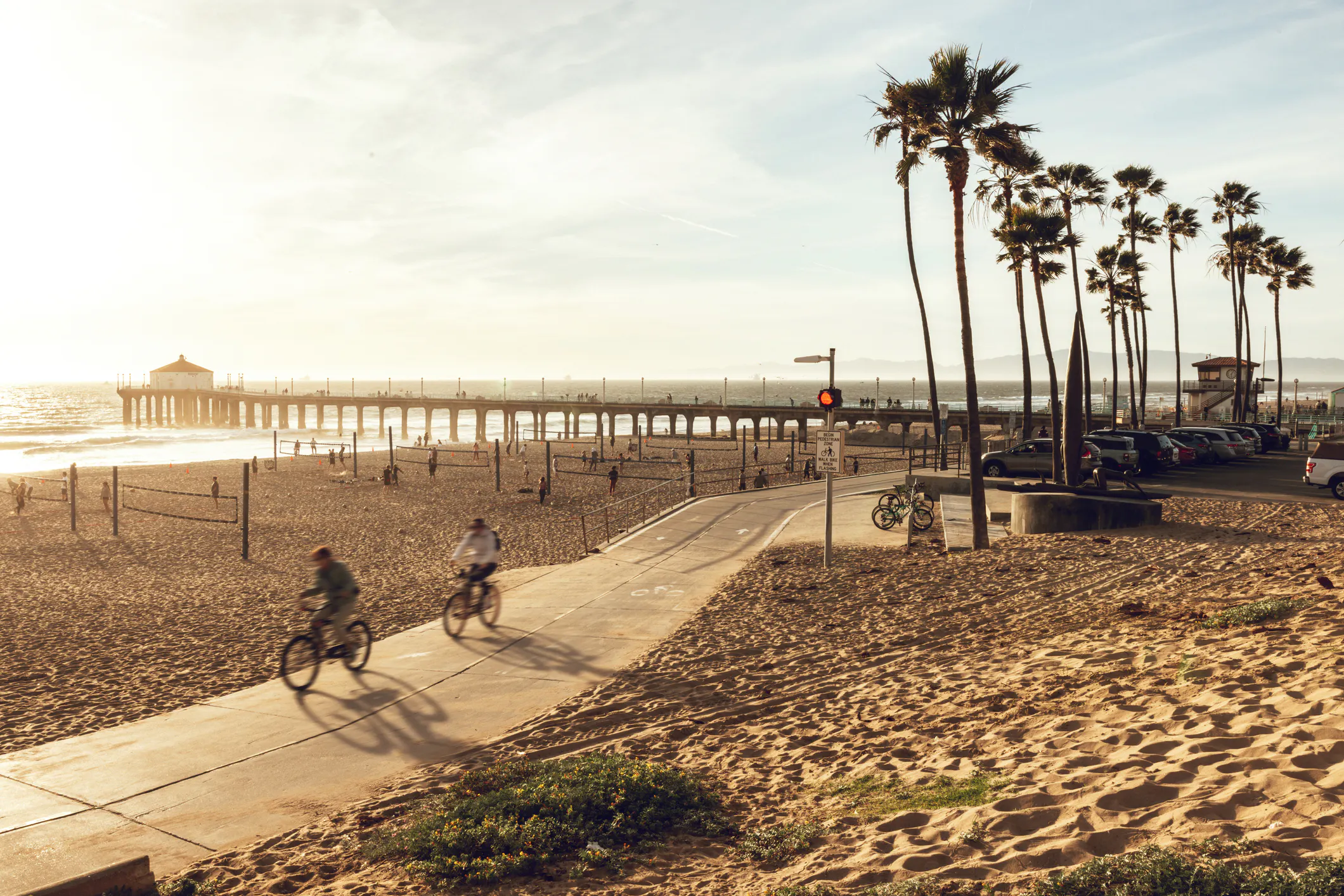
In two years, Paris became the first truly bikeable Olympic host city and left a permanent legacy of better, safer cycling. Ahead of the 2028 Olympics, Los Angeles can follow suit.
Before hosting the 2024 Olympics, Paris rewrote the transportation playbook for host cities. In two years, the French capital added 34 miles of new protected bike routes, created more than 27,000 bike parking spaces, and made all 35 Olympic venues safely accessible by bike, earning the unofficial title of the "first bikeable Olympics." With Los Angeles set to host the 2028 Summer Games — and dozens of North American cities preparing to host matches during the 2026 World Cup and 2031 Women’s World Cup — the U.S. bike industry, local leaders, and advocates have a rare opportunity to use major international events as catalysts for bike improvements that will last long after the final whistle and closing ceremony.
Here's what Paris did, why it worked, and lessons LA and other host cities can follow.
Start With Political Will — Everything Else Follows
Paris didn't become bikeable overnight. The groundwork was laid nearly a decade before the Olympic torch arrived. Mayor Anne Hidalgo launched Plan Vélo in 2015, committing the equivalent of $290 million to expand protected bike lanes citywide. The payoff came quickly: Paris raised bike ridership 54% in a single year, driven almost entirely by new, protected infrastructure.
The Olympics then accelerated what political leadership had already set in motion. Just two years before the opening ceremony, existing routes to venues were unmarked and dangerous and early Olympic planning focused exclusively on buses and rail. Advocates pushed for cycling to be included. City officials listened and moved fast.
The lesson for LA: Lasting transportation improvements require both public support and consistent leadership. LA voters have already signaled their support through a 2024 ballot measure demanding a mobility safety plan, but the city has yet to outline its implementation. Mayor Bass' most recent budget also cut funding to the two agencies responsible for street safety.
Build It Permanent
The centerpiece of Paris' build was the "olympiste" network — more than 37 miles of permanent, protected paths connecting every competition site. All of it was built to stay. Those new cycle paths brought the total across the Ile-de-France region to more than 400 kilometers of protected lanes. The 10,000 temporary bike racks installed at venues didn't disappear after the closing ceremony, either. They were redistributed to schools, sports centers, and municipal facilities across the city.
This is the contrast with past host cities. Rio de Janeiro rapidly deployed 450 kilometers of bike lanes for the 2016 Games, then let them fall apart from systemic neglect. Beijing built a bike share network for 2008 that gradually declined due to safety, pricing, and policy failures. Event-driven infrastructure that isn't embedded in a city's long-term network doesn't survive.
The lesson for LA: Every lane, every rack, and every bike share dock built for 2028 should be designed as a permanent city asset from day one, not a temporary amenity.
Bike Share + Parking Are Just as Important as the Lanes
Infrastructure is more than pavement. For the Games, Paris expanded its Vélib Métropole bike share fleet by 3,000 bikes to 20,000 total and added 10 new stations. Lime brought an additional 5,000 electric bicycles online, bringing the city's total e-bike share fleet to 15,000. All told, more than 46,000 rental bikes were available during the Games, many of them electric.
Parking also kept pace. More than 3,000 permanent bike rack spaces were installed around the Stade de France before the Games. A solar-covered, high-tech bike parking facility opened at a major train station, and a double-decker rack facility went in at the stadium itself. Paris knew that to get people riding, their entire ride needed to be easy — including the final destination.
The lesson for LA: Protected lanes without abundant, convenient, and secure parking as well as accessible bike share make for an incomplete bike network. The full system has to work together.
The Legacy Is Real, But There Are Still Lessons to Improve On
The numbers from post-Olympic Paris are striking. Cycling now accounts for 11.2% of all trips in Paris, versus just 4.3% by car. This is a remarkable shift from 2010, when bikes represented just 3% of travel.
But recent research adds important nuance. A 2026 study of post-Olympic bike lane utilization found that buffer zones around Olympic routes retained only 26%–59% of their peak Games-era usage. The takeaway isn't that the infrastructure failed — it's that Olympic bike infrastructure must be designed as connective tissue in a citywide low-stress network, not as standalone showcase corridors. Paris's broader network is what's sustaining ridership gains. The olympiste paths work because they connect to everything else.
We've covered the contrast between ambitious commitments and slower-than-hoped execution before. The cities that close that gap are the ones that treat advocacy, political will, and construction as a continuous, coordinated effort — not sequential steps.
LA, Now It’s Your Turn
Paris had a decade of groundwork before the Olympics arrived. L.A. has less than three years.
The good news: Los Angeles already has a strong network of transportation advocates working to create a safer, more connected bike network. Organizations like Move LA, BikeLA, and ActiveSGV are helping lead the effort locally, creating an opportunity for LA to build on proven strategies while tailoring them to the city's unique needs. They also have an opportunity to learn from groups like Paris en Selle — a key driver of the Paris bike build — who have shared lessons from that success with advocates preparing for the 2028 Olympics.
Even better, PeopleForBikes is already on the ground in Los Angeles. Through Ride LA Together, we're bringing the U.S. bike industry, national groups, and local partners together to build the political and public will for quality, lasting bike infrastructure ahead of 2028 and get more people excited about riding bikes more often. Our City Ratings data identifies exactly where LA's low-stress network gaps are most critical — and where Olympic investment would deliver the greatest long-term impact.
Projects Paving the Way in LA
PeopleForBikes is rallying support around six key infrastructure projects already in motion across the region.
- Festival Trail: The Festival Trail envisions a network of car-free, multi-modal corridors linking Olympic venues, green spaces, and neighborhoods across Los Angeles County. The project also includes Resiliency Hubs along the route — public spaces with shade, water, charging stations, and restrooms — investments that will benefit locals and visitors long after the Games.
- LA River Bikeway: Metro's LA River Path project looks to deliver a new protected bike and pedestrian path along a critical transportation corridor — an approximately 8-mile stretch of the Los Angeles River, running from the Valley through Downtown LA and Long Beach.
- Rail to River: This 4-mile active transportation connection would link the Metro A Line's Slauson Station to the LA River, running through the Bell, Huntington Park, and Florence-Firestone neighborhoods — communities that are densely populated, transit-dependent, and historically underserved with safe places to bike.
- Western Our Way: Between 2010 and 2019, 136 severe and fatal collisions occurred on a 4.5-mile stretch of Western Avenue. This project targets that corridor directly with protected bike lanes, pedestrian safety improvements, and new crossings.
- San Gabriel Valley Greenway: The San Gabriel Valley Greenway Network plan would create 130 miles of connected bike paths, trails, and green space across the San Gabriel Valley, built along the region's existing flood control channels and river easements. The project vastly improves Olympic venue access while also delivering on long-term regional connectivity, emissions reduction, and stormwater management goals.
- Sunset4All: This community-led campaign looks to bring 3.2 miles of protected bike lanes, pedestrian improvements, trees, and pocket parks to Sunset Boulevard. Sunset4All has identified more than $600 million in eligible grant opportunities by installing protected bike lanes, making it one of the highest leverage projects ahead of 2028.
What Does Success Look Like?
By 2028, priority bike projects are funded and built, creating connected, low-stress networks that make it safe and easy for more people to bike. With those improved networks, participation grows, with more people biking across LA not just for the Olympics, but for everyday trips for years to come.
The 2028 Olympic Games are around the corner. Paris showed the world what a city looks like when it chooses to meet the moment. The U.S. bike industry, advocates, and local leaders need to make sure Los Angeles makes the same choice — and makes it now.
Ready to get involved? Reach out to PeopleForBikes at info@peopleforbikes.org to learn more.
Related Locations:

Take Action

Donate Now
Bring Better Biking to Your Community