

If Americans Are Riding, Why Aren’t They Buying?
By: PeopleForBikes Staff
While bike sales lag behind, rising service and gear purchases confirm ridership is healthy.
PeopleForBikes is leading the charge to better understand and grow the base of people who ride bikes in America. In support of this work, our new blog series explores what the latest research tells us about who’s riding, how often, and why it matters for the future of bicycling and the bike industry.
Read More:
Why Bicycling Participation Matters and What’s Next
Engaging Casual Participants to Grow Bicycling
Supporting Youth Participation to Grow Bicycling
Where People Ride Bikes, People Buy Bikes
In earlier installments of this blog series, we shared data showing that ridership in America is growing, particularly among casual riders and kids. However, data also suggest that bike sales aren’t tracking with this growth in ridership. In this blog, we’ll explore some reasons why bike sales might be lagging right now.
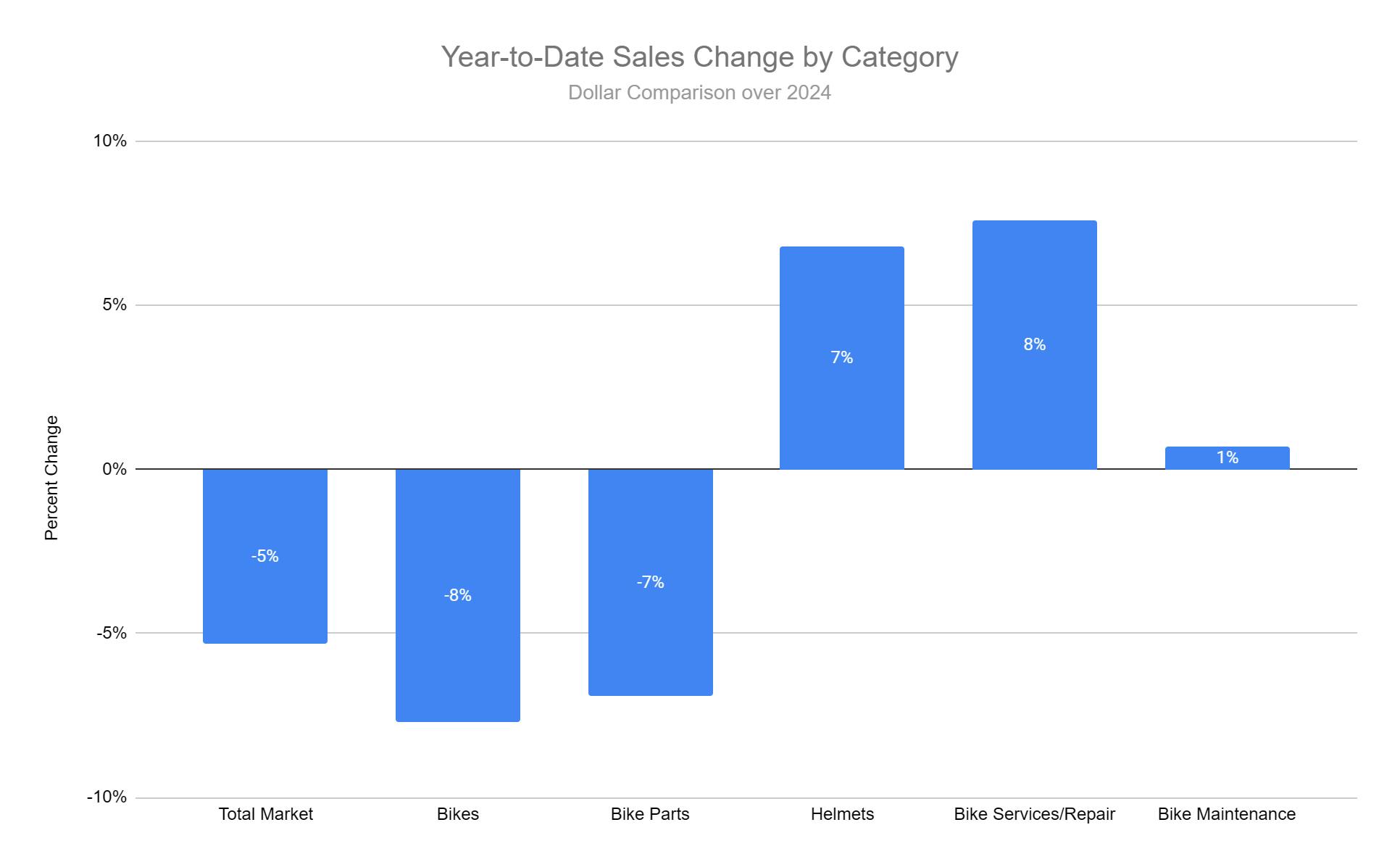
Before we get into why bike sales aren’t tracking with ridership trends, it is worth noting that some market categories are on the rise, namely those related to increased participation. Through July 2025, helmet sales increased 7% year to date (YTD). Similarly, the shop services category is growing, up 8% YTD. Even maintenance tools are up 1%, with patch kits specifically seeing double-digit increases. Taken together, these patterns support the growth patterns we see in ridership.
So why aren’t these riders buying bikes? First, it may be that the pandemic bike boom and subsequent discounting pulled forward bike sales. That is, people who would have otherwise purchased a bike in 2024 or 2025 instead bought one during the early years of the pandemic or were lured by the heavy discounting that followed after inventories swelled. In short, a bunch of people bought bikes between 2020 and 2023 and aren’t yet ready to replace those bikes.
Further economic conditions aren’t conducive to spending on discretionary items like bikes, either. Concerns about tariffs, inflation, unemployment, and rising costs of living are likely contributing to a shift toward more conservative consumer spending. Regardless of the degree to which any of these things come to pass, economic uncertainty typically depresses discretionary spending. And it isn’t just the bike industry — across airlines and automotive, healthcare, and retail, numerous companies pulled their financial guidance to investors this spring. Harley-Davidson, one such company, released the following statement: “Due to the uncertain global tariff situation and macroeconomic conditions, we are withdrawing our full year 2025 financial outlook."
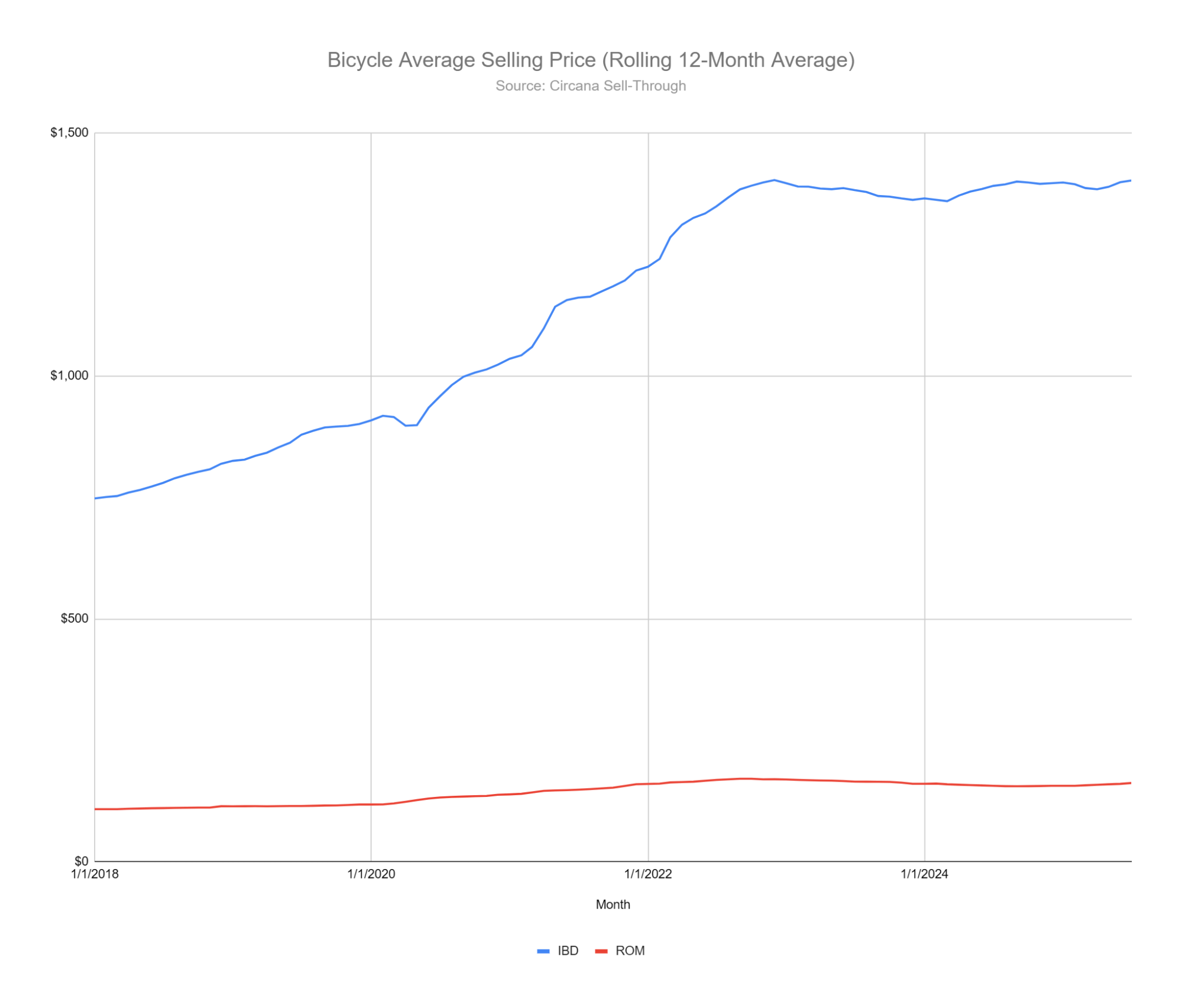
Finally, the increasing MSRPs of bicycles may also be depressing demand. Though tariffs are certainly one factor influencing the increase in average selling prices, this upward trend started long before. In the rest of market (ROM) channel, average selling prices increased nearly 50%, from $109 in 2018 to $162 in 2025. At independent bike dealers (IBDs), it’s even more pronounced, increasing from $748 to $1403 (almost 90%) since 2018.
All of that said, the recent growth in ridership is reason to be optimistic about the future of bicycling and the bike industry. As described in our previous blogs on the growth of casual and youth ridership, we have an opportunity to work together as an industry to focus on the continued growth of the participant base and set ourselves up for sustainable success when economic conditions improve.

Take Action

Donate Now
Bring Better Biking to Your Community