

Adaptive and Youth-Friendly Mountain Bike Trails Are Growing in the Adirondacks
By: Martina Haggerty, Vice President of Infrastructure
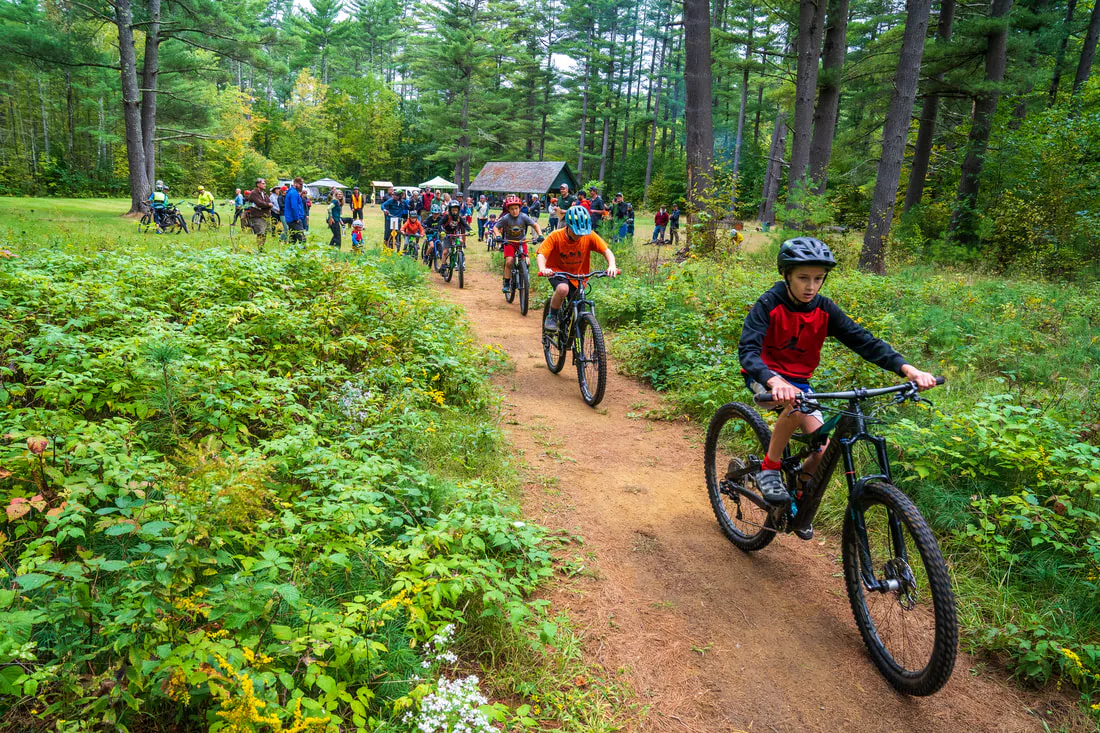
A PeopleForBikes-supported project in Keene, New York, is expanding adaptive-access, youth-friendly mountain bike trails in the Adirondacks, creating more inclusive outdoor recreation and strengthening the local economy.
Photo courtesy of the Barkeater Trails Alliance
The Adirondacks are famous for their rugged peaks and protected wilderness, but that same protection has meant limited access for mountain biking, especially for beginners, kids, and adaptive riders. In Keene, New York, the Barkeater Trails Alliance (BETA) is working to overcome those challenges while showing what’s possible when a community invests in bike infrastructure that’s designed for everyone. With support from a PeopleForBikes grant, BETA is building a trail system in the High Peaks region that prioritizes progression, accessibility, and inclusion — while also bringing new energy to the local outdoor economy.
Building Mountain Bike Trails for All Ages and Abilities
In June 2025, more than 100 people gathered to celebrate the opening of “Duzzi,” a new enduro-style trail at the East Branch Community Trails. The trail adds a challenge for experienced riders while seamlessly connecting to a growing network designed to serve a much broader audience. That range is intentional.
“Access to a wide variety of options is crucial for a diverse riding community,” says Megan Gorss, outreach coordinator at BETA. “We strive to offer enjoyable, high quality trails for all manner of riders on all manner of bikes.”
That wasn’t always the case in the Adirondacks. Early mountain bike trails in the region were often rugged, technical, and built by and for experienced riders. “As the sport and BETA’s influence have grown, we’ve expanded the kind of trails we build to include designs that appeal more to a wider range of riders,” says Gorss.
At East Branch, that shift is visible on the ground. Riders can now choose between smooth, approachable trails that build confidence and more technical features that offer progression over time. It’s a network that meets people wherever they are in their biking journey and gives them a reason to keep coming back.
Designing for adaptive riders has pushed that thinking even further. “When it comes to designing a trail system that can accommodate both adaptive and traditional bikes, our biggest challenge as folks who ride traditional bikes has been understanding the riding experience of folks on adaptive bikes,” notes Gorss. By working closely with adaptive riding experts from the Kelly Brush Foundation, BETA has been able to refine key elements like trail width and slope — small design decisions that make a big difference in who can ride.
How Local Advocacy Turned Into Real Trails
Projects like this don’t start with construction; they start with people. “Grassroots advocacy and local engagement have been absolutely key for these projects at every step,” Gorss says.
In Keene, the push began with the Keene Youth Commission, which helped shape a vision for trails that would serve families, young riders, and people returning to biking after time away or an injury. That early advocacy carried through into construction. Community members didn’t just support the project, they helped build it. “With each phase of construction, the people of Keene and surrounding areas have been the lifeblood of building and maintaining trails that provide a uniquely accessible riding experience,” says Gorss. Today, that community ownership is part of what makes East Branch work so well. The trails reflect what people actually wanted and needed.
Expanding Bike Access in the Adirondacks
Building bike trails in the Adirondacks isn’t simple. The region’s “forever wild” protections are essential to preserving its landscapes, but they can also make new trail development challenging. “‘Forever wild’ is sanctified within our state constitution. It is a double-edged sword, providing a powerful framework to protect the wild lands that make this park so special, but oftentimes making trail development an arduous process,” says Gorss.
That’s where partnerships and good information matter. PeopleForBikes supports projects like this not just through funding but also with data, policy guidance, and other resources that help local leaders understand where biking is allowed and where access can expand. In places like the Adirondacks, that clarity can help communities move forward with confidence.
At East Branch, success came from aligning local advocates, town leadership, county officials, and state agencies around a shared goal. According to Gorss, “It was a great puzzle– many interlocking, interdependent pieces that together created something new, something needed, something incredible.”
Turning Investment Into Impact
The East Branch Community Trails have been built in phases, each one expanding who the system serves. The first phase created a foundation of multi-use trails, while the second improved connectivity and flow. Now, with support from PeopleForBikes and other partners, the third phase is adding a skills loop, progression features, and new trail experiences that continue to broaden access. That steady progress depends on consistent investment. “With multiple sources of funds, including a grant from PeopleForBikes, we never had to wonder if we’d be able to afford the next phase of development,” says Gorss.
What Inclusive Bike Infrastructure Looks Like in Practice
The impact of East Branch is already showing up in the people who use it. The trail network has quickly become a go-to place for beginners, families, and riders returning after injury. One rider shared how meaningful that experience was after recovering from cancer: “I rode the new trail at the East Branch system for the first time this past summer. I have had to take a break from biking for a bit due to fighting cancer. I won and am back to doing some gentle riding. Getting out into the woods felt healing and my pretty out of shape body was so thankful for the switchbacks and the downhill cruise was bliss, I rode with a grin! Grateful.”
Others describe it as a place where the whole family can ride together: “My family and I love the EBCT because there is something for everyone in our growing family. This trail network is the perfect place to introduce someone to the sport of mountain biking! The cherry on top is the great gathering area for where food, drinks, and fun is enjoyed!”
And for riders adapting to physical limitations, access to smoother, more forgiving terrain can be the difference between riding and not riding at all: “I’ve ridden the East Branch trails several times with my friend who, due to a terrible accident many years ago, can only ride our hilly terrain using an e-bike. His injuries prevent him from riding rugged terrain found elsewhere in the BETA network. The East Branch trail network allows us to continue experiencing our shared love of the sport together.”
A Model for Other Communities
BETA’s long-term vision is a 7-mile trail system, including a bike skills park designed to welcome riders of all abilities and create a stronger sense of community around biking. But the bigger story is what this project represents. “In short: we hope to see more people on bikes,” says Gorss. “The outdoors are for everyone. Bikes are freedom machines.”
That idea — simple, yet powerful — is something any community can act on. With the right mix of local leadership, community advocacy, thoughtful design, and targeted investment, it’s possible to create bike infrastructure that not only serves existing riders but also welcomes entirely new ones.
That’s what PeopleForBikes is working to support across the country — and what our supporters make possible.
Explore more bike infrastructure and trail projects across the U.S. with PeopleForBikes’ Bike Project Tracker and learn how your community can expand safe, inclusive places to ride by using our free Recreational Bicycling Access Tool.
Related Locations:

Take Action

Donate Now
Bring Better Biking to Your Community