Bike Libraries Increase Bicycle Access for All
By: Ray Keener, Contributing Writer
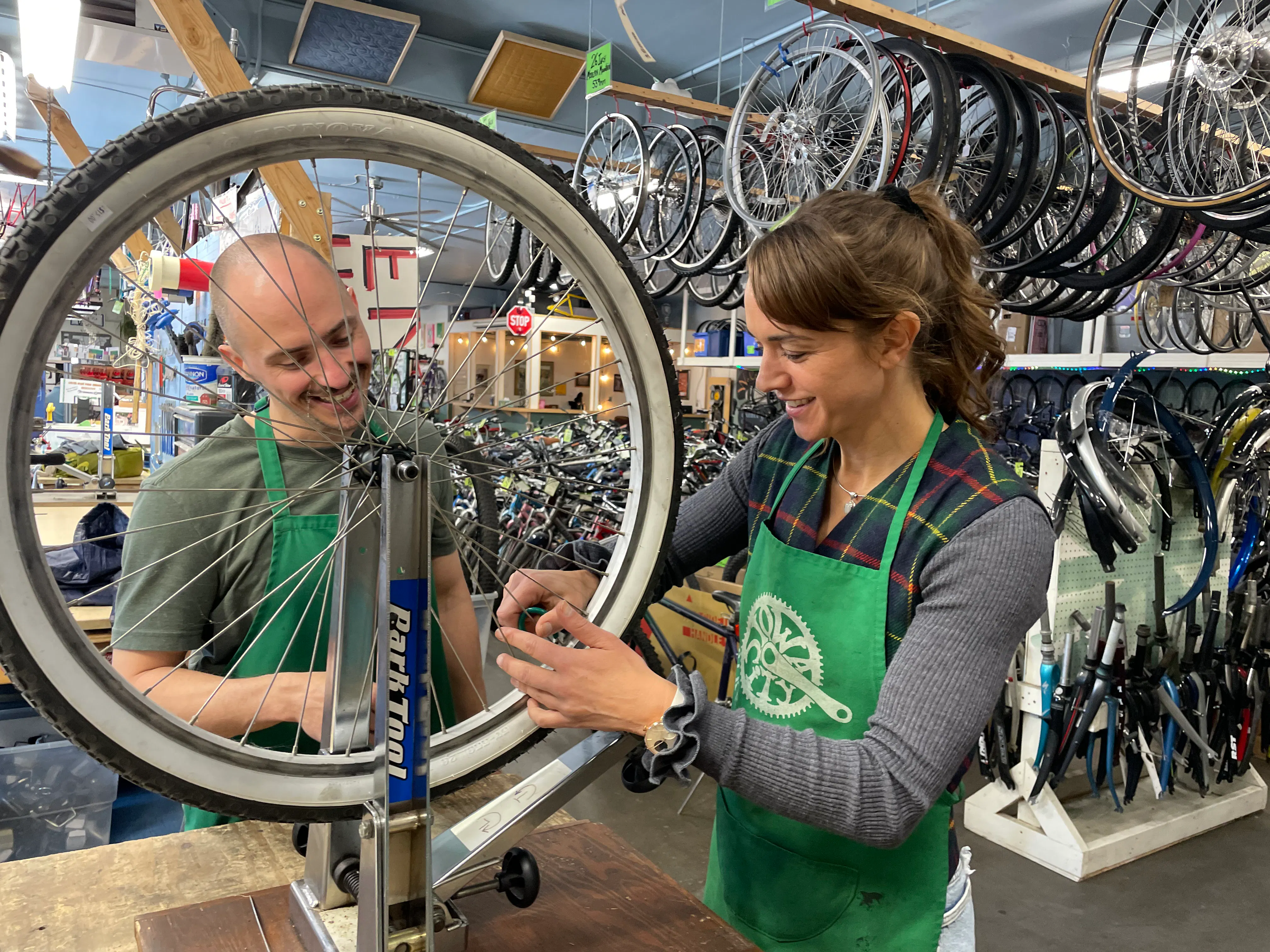
From offering affordable options to creating grassroots community hubs, bike libraries are putting more people on bikes.
Due to a pandemic-related bike sales boom and ever-improving infrastructure, demand for bicycles for Americans is at an all-time high. While PeopleForBikes research shows that more than 50% of Americans (171 million) own or have access to their own bike, new ways to access bicycling are on the upswing outside of purchasing from a local bike shop, mass retailer, or online.
Bike share programs continue to grow every year, with bikes available on a cost-per-use basis. There are also new bike leasing programs for adults as well as youth-focused programs that provide bikes for kids in need. These types of efforts are part of a broader ecosystem of organizations working to expand access and create pathways for more adults and kids to get on bikes.
Outside of those core programs, there is a lesser-known approach that’s doing great work to make bikes accessible to underrepresented and low-income populations: bike libraries.
To learn more about how bike libraries function and what populations they serve, we checked in with the Bike Library in Iowa City, Iowa. Executive Director Audrey Wiedemeier explained their core services for local cyclists and how they generate momentum and funding to keep serving and growing the local biking community.
“The Iowa City Bike Library is a volunteer-powered, nonprofit community bike shop that has become a critical space for skill-sharing, social connection, and grassroots mobility justice,” says Wiedemeier. “The concept is simple: teach people how to ride, accept donated bikes, repair them, and get as many bikes back into the community at low or no cost.”
The organization is now in its 22nd year, with Wiedemeier at the helm since 2018. “Every day when we open the doors, we show that people working together at a local scale can meaningfully address big problems like inequality, climate change, and loneliness,” she says.
The library concept is as simple as it is ingenious. From the stock of fully dialed and ready-to-ride bikes, a renter picks one they like, puts down a deposit equivalent to the bike’s value (usually $200–400), and rides the bike for six months. Upon return, they get their deposit back less $50 with an option to purchase the bike. About 85% of riders end up keeping the bike they originally checked out.
Wiedemeier’s observations on the state of the bicycle marketplace are made from the perspective of her growing segment. “While the number of traditional bike shops and department store bike sales have declined for decades, access to bicycling is up,” she noted. “Due to increasing economic pressures, low-income and marginalized groups can't always afford to shop at traditional local bike shops. Community Bike Organizations (CBOs) is a bike shop model that’s growing up through the cracks and getting more people on bikes.”
The Bike Library is relatively large as CBOs go. With a $369,000 annual operating budget growing 10% a year and a full-time staff of six with 200 volunteers, it’s a substantial operation governed by a board of 11 directors.
Ryan Baker is one such board member, who also owns and operates World of Bikes, Iowa City’s largest commercial shop. Unlike some shops that consider CBOs competition for sales, Baker sees the collaboration as an opportunity.
“We try to donate usable items that we can no longer sell, like repair takeoff parts, aged inventory, items from staff parts bins, and occasional abandoned bikes from the service department that we would rather let the Bike Library have than try to sell ourselves,” Baker says. “We also will partner with the Bike Library for youth events where we prepare some of our trade-ins for giveaways to kids in need.”
Because of the cost of new bikes (now about three times the price of a similar used bike), Baker doesn’t see the Bike Library as competition and often refers people there. “We understand that the bikes we sell are either not in someone's budget or the buyers are not willing to make the investment in something new,” Baker says. “We feel secure that the Bike Library has gone through the necessary processes to provide safe and reliable bikes at lower price points.”
Baker has great advice for commercial shops and CBOs seeking partnership. “Reach out and have coffee! Figure out how to work together to get more people on bikes. Be a donation drop-off point. Give positive referrals to each other. Partner on events. Simply being present together will attract new customers.”
Wiedemeier’s passion for the shop and its staff and patrons is inspiring to all. “Whether it’s flying along a trail with new friends, getting your gears shifting smoothly again, or grooving at our Bike-in Beats annual concert, the Bike Library offers embodied experiences that generate a sense of possibility and excitement for the future,” she says.
Models like bike libraries show how local solutions can play a critical role in getting more people on bikes. When paired with youth programming, community engagement, and investments in safe, connected infrastructure, they become part of a broader effort to grow ridership and build lifelong riders.
Related Locations:
Take Action

Donate Now
Bring Better Biking to Your Community